It was a day with a clear good weather, as evident by the photos of the still water and reflection of the park surrounding the Yishun Pond, taken from Khoo Teck Puat Hospital.
The Enterolobium cyclocarpum planted along the promenade of the pond has hardly grown much, as observed by the sparse crown of few leaves. The string of floating platforms of marginal aquatic plants, on the other hand, are growing so well. It is an innovative way of creating an island of plants in a pool of water.
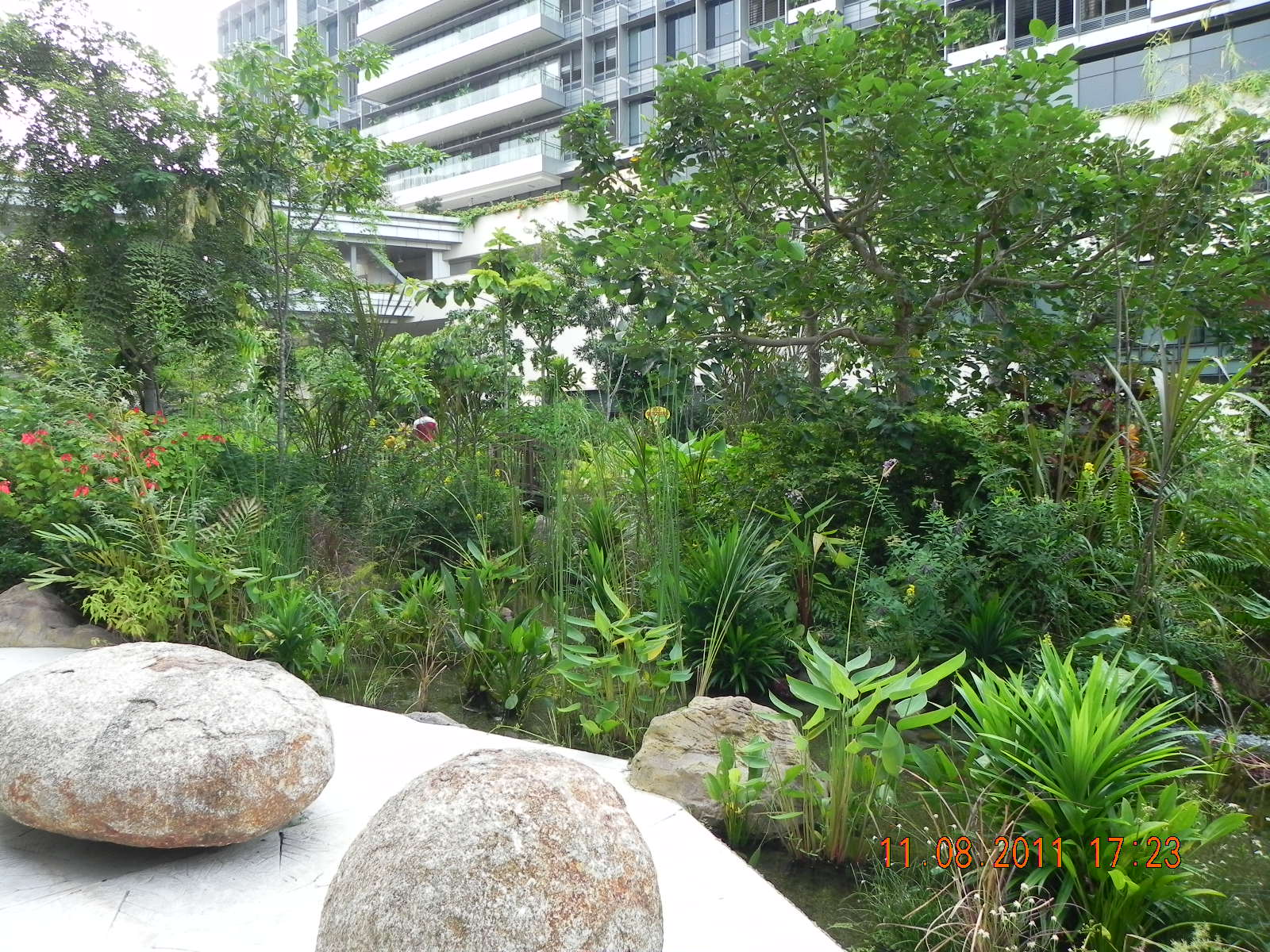
Back at the hospital compound, the picturesque garden has established so much since the hospital first opened its doors. I was lucky to capture a photo of a lady bug and managed to focus a ray of light on it for better effect. They have also cleaned up the pond water considerably and it was sparkling clear. However, I noticed most of the fishes e.g. Tiger Barbs, Archer Fish, I spotted previously were nowhere to be found. I wonder if they were deliberately or accidentally removed in the cleaning process?
I found that the new leaf flushes of the Flacourtia inermis were slightly distorted and when I turned the orange leaves over, I discovered colonies of young and adult black and brown aphids. Yes, they looked absolutely disgusting but I guess this is part of the natural ecological cycle.
In an earlier post on this hospital, I highlighted some terrestrial plants that were grown in water. Here, one can see clusters of the common culinary Pandanus amaryllifolius with aerial roots growing in the water too. Unfortunately, they were not emitting the typical pandan fragrance in the air.
Anyway, this is the benchmark for new hospitals that are developed in Singapore. It is no longer just an institution where the sick or injured patients receive medical or surgical treatment. It has to be green and well-landscaped for aesthetics and to promote therapeutic recovery. Green is now the new black.
Showing posts with label enterolobium. Show all posts
09 April 2012
17 August 2011
KHOO TECK PUAT HOSPITAL
This pond is getting too overcrowded now. But once again, what is interesting is the planting of seemingly terrestrial plants in water, such as these Pennisetum x advena 'Rubrum'.
But the garden is becoming more established and beautiful by the day. However, as expected months ago, the single lone Enterolobium cyclocarpum beside the promenade is still struggling, despite being planted almost 6 months ago. I think this tree will not make it.
04 July 2011
KHOO TECK PUAT HOSPITAL
I don't know what to make of this. I see the Bauhinia kockiana planted in narrow planting troughs more and more frequently these days and it really irks me.
Like I posted before, sooner or later, the plants will develop severe nitrogen nutrient deficiency symptoms, as evident by the pale green leaves and pale orange flowers, when planted under such conditions without being given adequate fertilizers. So unless one is willing or able to keep up with the fertilizing regime required by Bauhinias, I would suggest not to plant them in such small confined spaces where nutrient availability will always be an issue.
On this floor, one can have a great bird's eye view of the Yishun pond. As expected by me, the bare crown Enterolobium cyclocarpum has not recovered from the transplanting shock, especially since the planting space is limited and on higher grounds.
Like I posted before, sooner or later, the plants will develop severe nitrogen nutrient deficiency symptoms, as evident by the pale green leaves and pale orange flowers, when planted under such conditions without being given adequate fertilizers. So unless one is willing or able to keep up with the fertilizing regime required by Bauhinias, I would suggest not to plant them in such small confined spaces where nutrient availability will always be an issue.
On this floor, one can have a great bird's eye view of the Yishun pond. As expected by me, the bare crown Enterolobium cyclocarpum has not recovered from the transplanting shock, especially since the planting space is limited and on higher grounds.
20 January 2011
KHOO TECK PUAT HOSPITAL
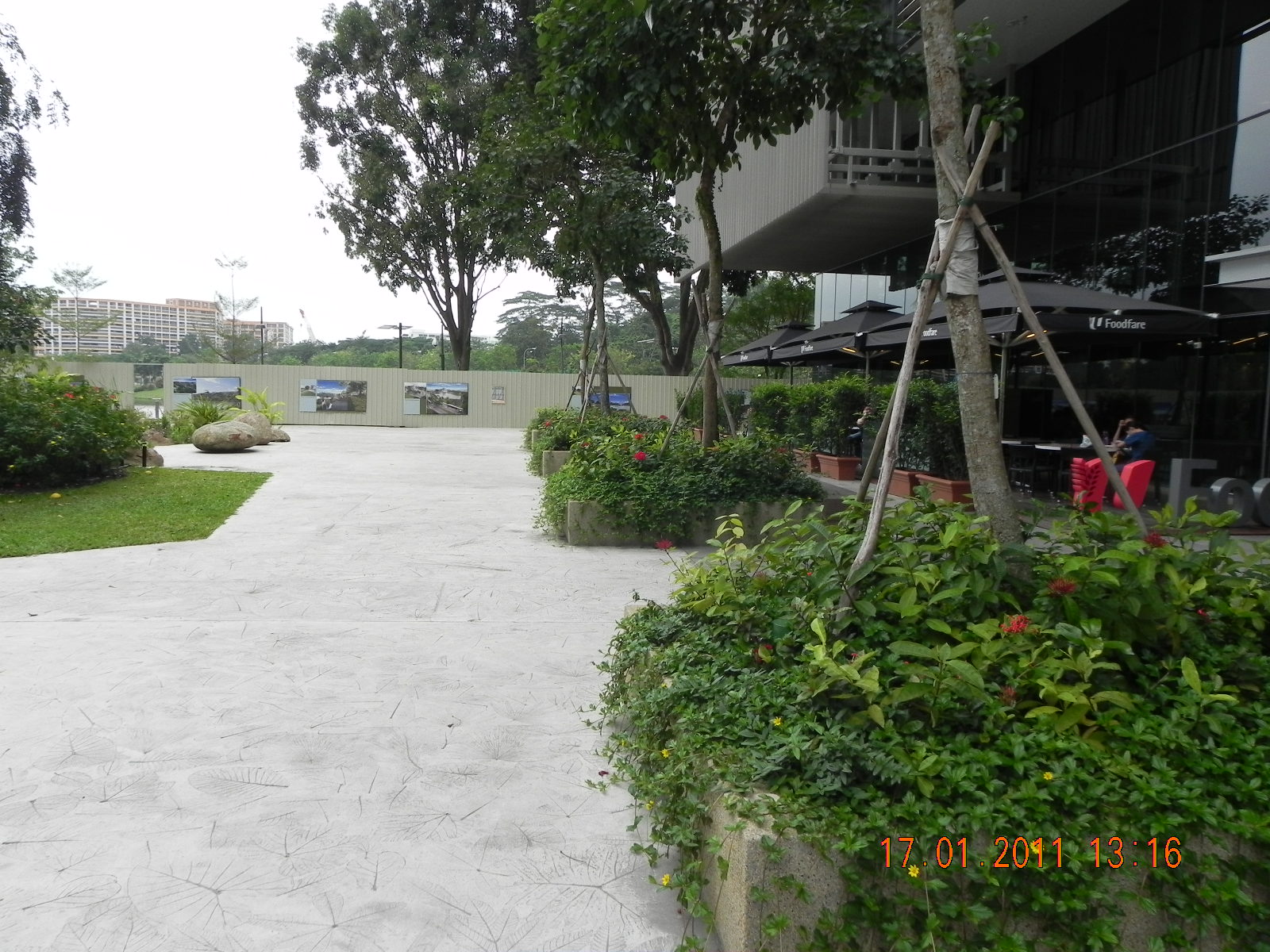
At the far end near the Yishun Pond was a transplanted Enterolobium cyclocarpum (common name: Elephant Ear Tree; Family: Fabaceae/Leguminosae). From what I saw of the site conditions from the other side, it was definitely not planted at the best location since its tree collar was buried at least a foot deep and there is no space for its extensive surface roots to grow.
A link on this huge interesting tree is shown below:
Subscribe to:
Posts (Atom)