
13 November 2012
PREMNA FOETIDA

SECRET LIFE OF TREES

This native Aralidium pinnatifidum tree (Family: Aralidaceae) with interesting pinnately-lobed leaves flowered recently. As observed from the photos, the inflorescence is a panicle with small creamy unisexual flowers.
I am certain that the next tree is an Ardisia (Family: Primulaceae) although I have yet to find out the specific epithet. The pendulous compound umbel inflorescence bears lovely fuchsia pink flowers that caught my attention from afar. How pretty they look!
Anyway, under the APG III (Angiosperm Phylogeny Group) flowering plant classification system, the former Myrsinaceae is no longer recognized and it is now placed under the Primulaceae Family.


MYRCIARIA CAULIFLORA

NB on 11 Jan 13: The black fruits of this tree known as Myrciaria cauliflora (Common Name: Brazilian Grape Tree, Jaboticaba, Jabuticaba; Family: Myrtaceae) is used to make jam, tart, wine and liqeur. I don't remember seeing the white flowers but I definitely saw the fruits. Since it is edible, I will taste one of the fruits when I see it again.


BREYNIA ROSEA-PICTA


KITE

It was a challenge to find the Brahminy Kite on the LCD screen of my camera as it wasn't stationary but was going round in circles. When I finally managed to locate it, it was already a bit far away from me. Fortunately, I was able to have a clearer view of the bird before I had to resume back to my duties.

CUSCUTA

Like many other parasitic plants, the Dodder has haustoria that attaches itself onto the branches of its host plants and draws nutrients from it. In fact, this plant has minute scales as leaves and an interesting life-cycle, which includes flowering and seed setting, like any other angiosperm.
I first saw this parasitic plant in the late 90s growing on and smothering a bed of dwarf Duranta shrubs I planted in front of the Lavender MRT station. I have also seen it growing on the Sphagneticola trilobata (Synonym: Wedelia trilobata, Complaya trilobata, Thelechitonia trilobata, Silphium trilobatum; Family: Asteraceae / Compositae). The only way to get rid of this parasite is not to pull it off the host plant because its remaining haustoria on the host plant is more than capable of regenerating the parasitic plant, but rather to prune the host plant back significantly to remove any remnants of the parasite. In extreme cases, the entire host plant may have to be removed and discarded and the plant replaced with a non-host species.
COLONIAL GARDEN

The first is the 2 m tall variegated Pachira glabra planted near a walkway. It is not a tree to be missed.
Amongst the numerous fragrant Jasminium shrubs from the same family as the olive plant, this J. nitidum (Common Name: Angel Wing Jasmine, Star Jasmine; Family: Oleaceae) is one of my favourites although I hardly plant them because of its infrequent flowering. But when it does flower, the pinkish-purple floral buds of this night blooming plant open up to reveal white flowers that emit a strong fragrance into the air.
Finally, there is also the very rare white-flower Jacaranda mimosifolia which I hope will grow into an impressive tree for this part of the garden.


SOLANUM VINE


BAY EAST

Having said that, I am thrilled that this plant is also one of the host plants of the very beautiful Plain Tiger butterfly found locally. Thankfully, with the knowledge and experience gained since the days of HortPark, I have been able to sustain a population of this butterfly species at Bay East and Bay South now with the planting of the other more reliable host plant Calotropis gigantea (Common Name: Crown Flower). I hope more people would learn to appreciate the beauty of its caterpillars in order to fully appreciate the true beauty of its adult butterfly.
On a separate note, the Calliandra genus has a range of beautiful shrubs or treelets because of its free-flowering nature and showy inflorescences. What is interesting though, is the attractive part of the umbel inflorescence is the collective group of lengthy coloured stamens, as shown in the photos here. The small anthers are visible on the ends of the filaments. The corolla, or the ring of fused petals, right at the base of the stamens can be seen in the last photo.


THE DINOSAUR PROJECT

Most of the movie was shown through the video camera of Luke, who is the son of the leader Johnathan of the first explorer team and who secretly sneaked onto the helicopter carrying the crew. Needless to say, deep in the african jungle existed prehistoric creatures e.g. pterosaur, never before seen or documented by man. Through the shaky video footage, we saw how the team encountered predatory creatures which picked on the team one by one until a sole survivor remained. I will not give way the identity of this survivor here.
The movie ended with the discovery of the whereabouts of the survivor. None of the faces were familiar to me but I think this movie is kind of entertaining although it is not made out to be a blockbuster.


04 November 2012
DREAM
I had a weird dream this morning but I don't know how to interpret it.
It started with me driving a buggy with about six to eight people on it, including my colleagues. I was driving along a straight stretch of road and on the left were various developments. I was sort of showing them the landscape planting in front of these developments and when we reached the end of the road, I made a u-turn to drive back to where we came from. However, I discovered that the road that I drove on had now become a public road and I could no longer drive on it because the buggy is not meant to be driven on public roads.
To make matters worse, the brake of the buggy wasn't working properly and there were a few instances where I tried to avoid oncoming vehicles and had problems with the braking. Nevertheless, I managed to avert any accidents and remembered stopping the buggy on time before it went into a drain. I turned around and asked those on board for help to push the buggy back because there was no more forward room to manoeuvre the buggy. However, no one gave any indication that they were willing to help. So I moved to the front of the buggy and pushed the buggy back.
Somehow that was when I woke up. I told a friend about it and he commented that it signified that there was no turning back.
It started with me driving a buggy with about six to eight people on it, including my colleagues. I was driving along a straight stretch of road and on the left were various developments. I was sort of showing them the landscape planting in front of these developments and when we reached the end of the road, I made a u-turn to drive back to where we came from. However, I discovered that the road that I drove on had now become a public road and I could no longer drive on it because the buggy is not meant to be driven on public roads.
To make matters worse, the brake of the buggy wasn't working properly and there were a few instances where I tried to avoid oncoming vehicles and had problems with the braking. Nevertheless, I managed to avert any accidents and remembered stopping the buggy on time before it went into a drain. I turned around and asked those on board for help to push the buggy back because there was no more forward room to manoeuvre the buggy. However, no one gave any indication that they were willing to help. So I moved to the front of the buggy and pushed the buggy back.
Somehow that was when I woke up. I told a friend about it and he commented that it signified that there was no turning back.
01 November 2012
LOOPER

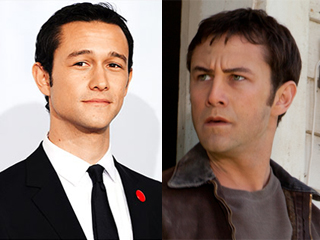
They transform the adorable Joseph with prosthetic into a totally different person, who somehow managed to disgust me, to make him resemble a younger Bruce. Set in the future in 2044 where 10% of the population possessed telekinesis through mutation of their genes and 2074 where time travel was invented, it tracks the life of a looper - a professional killer in 2044 hired by a criminal boss known as the Rainmaker from the future to kill off their targets and dispose off their bodies in present time with reward in the form of silver bars.
Complications arose when the older Joe was captured and sent by the Rainmaker to the present via a time machine to be killed by the younger Joe, to terminate their contract to close the loop. Opposition to this was punishable by death Before being held captive, the old Joe was living in bliss with a newfound love played by Xu Qing and fought hard to stay alive so that he can change the course of history by killing the young Rainmaker to save his love interest from being killed. That was when both the young and old Joe met Sara and her only son Cid who lived in a farm.
The old Joe managed to track down three children with the same birthday as the Rainmaker and killed the innocent boys one at a time. After killing off two children, he was on to kill the third, who turned out to be Cid. Determined to save Cid after becoming close with Sara, the younger Joe turned against his older self. It was also then that Joe discovered that Cid was a freak, possessed very strong telekinetic powers and was capable of turning violent and killing people when he was enraged. When the younger Joe realized that if the older him killed Sara, that was the tipping point that pushed Cid over the edge to become the future ruthless Rainmaker if he witnessed the brutal murder of his mum, he had to make a tough choice to sacrifice his own life instead so that his older self would cease to exist, thereby dissolving the danger faced by Sara and her son.
The science fiction action movie started off quite promisingly but somewhat lost steam along the way. What was a time travel assassination eventually turned out to be a horrifying "Rosemary's child" adaptation. It wasn't as good and enjoyable as I thought it would be though.



Subscribe to:
Posts (Atom)