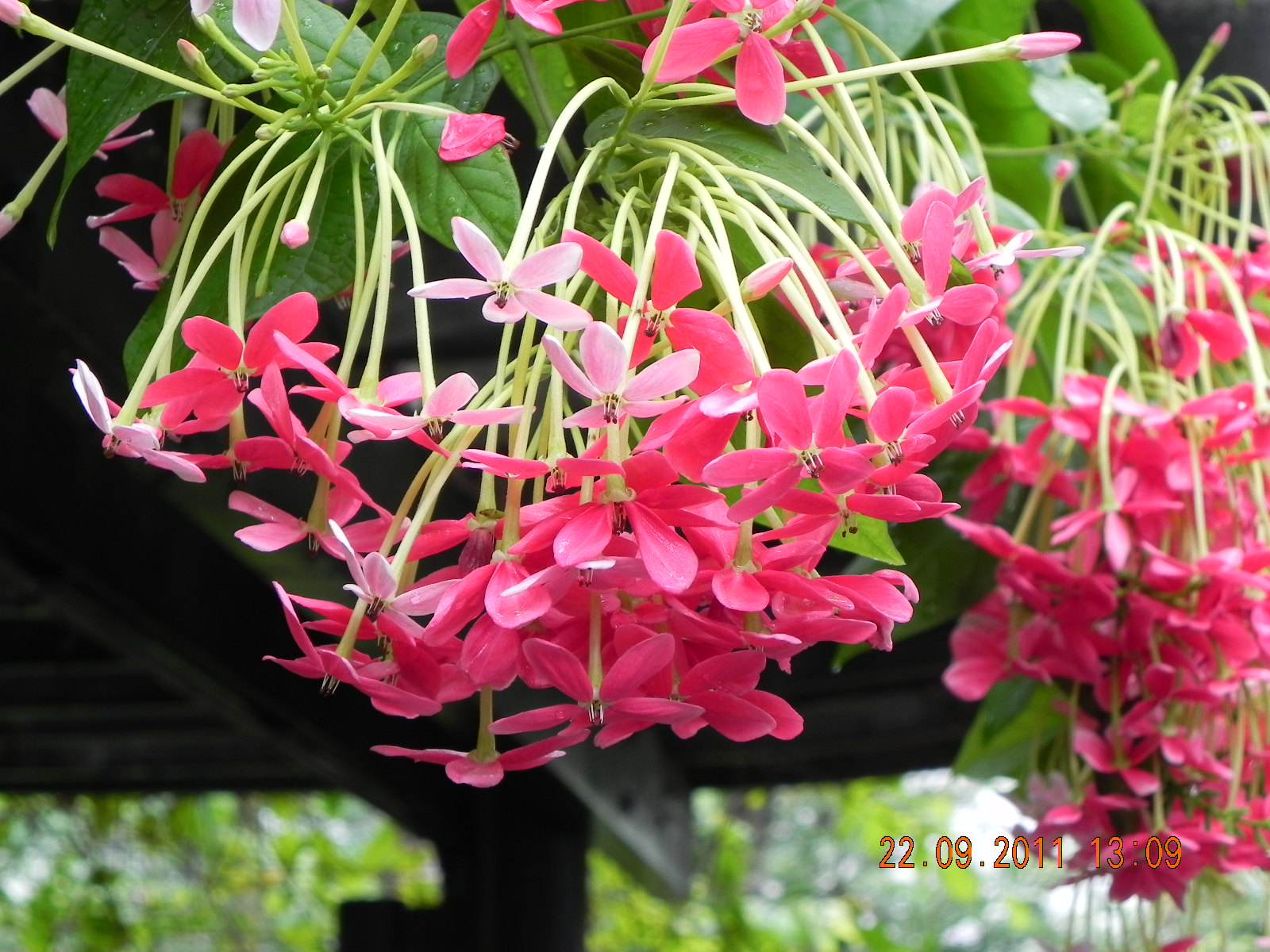
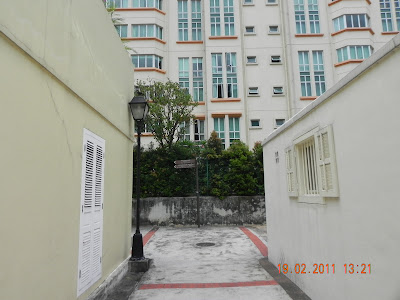
 A stone's throw away from Telok Ayer Green and through a short alley is the jewel Ann Siang Hill Park, that was developed to showcase the cultivation of spice trees and shrubs in the region in its hey days.
One of the historical wells was preserved and highlighted as one of the interesting features of the pocket park. If I remember correctly, the depth of water in the well was around 4 m deep.
A spiral staircase leads visitors to the upper timber, where there used to be a wooden swing. At that vantage point, one could see the big trees within the park, including 2 large Lychee (scientific name: Nephelium litch; synonym: Litchi chinensis; Family: Sapindaceae) trees but they were gone from the site.
There was also a flowering Syzygium with beautiful blooms of white flowers. The Muntingia calabura (common name: Strawberry Tree, Jam Tree; Family: Elaeocarpaceae) at the corner of the upper deck before the turn is still there and the fresh red cherry-like fruits still tasted as sweet as I remember. It is also a favourite with some of the birds. Because of my love for this tree, I planted so many of them at HortPark's Irrigation Pond but they never gave me a single fruit for eating because of disease problems.
Surprisingly, the Rondeletia leucophylla that was introduced back then is still at the site, which is testament of how hardy the shrub is.
2 links on the interesting trees are attached here: