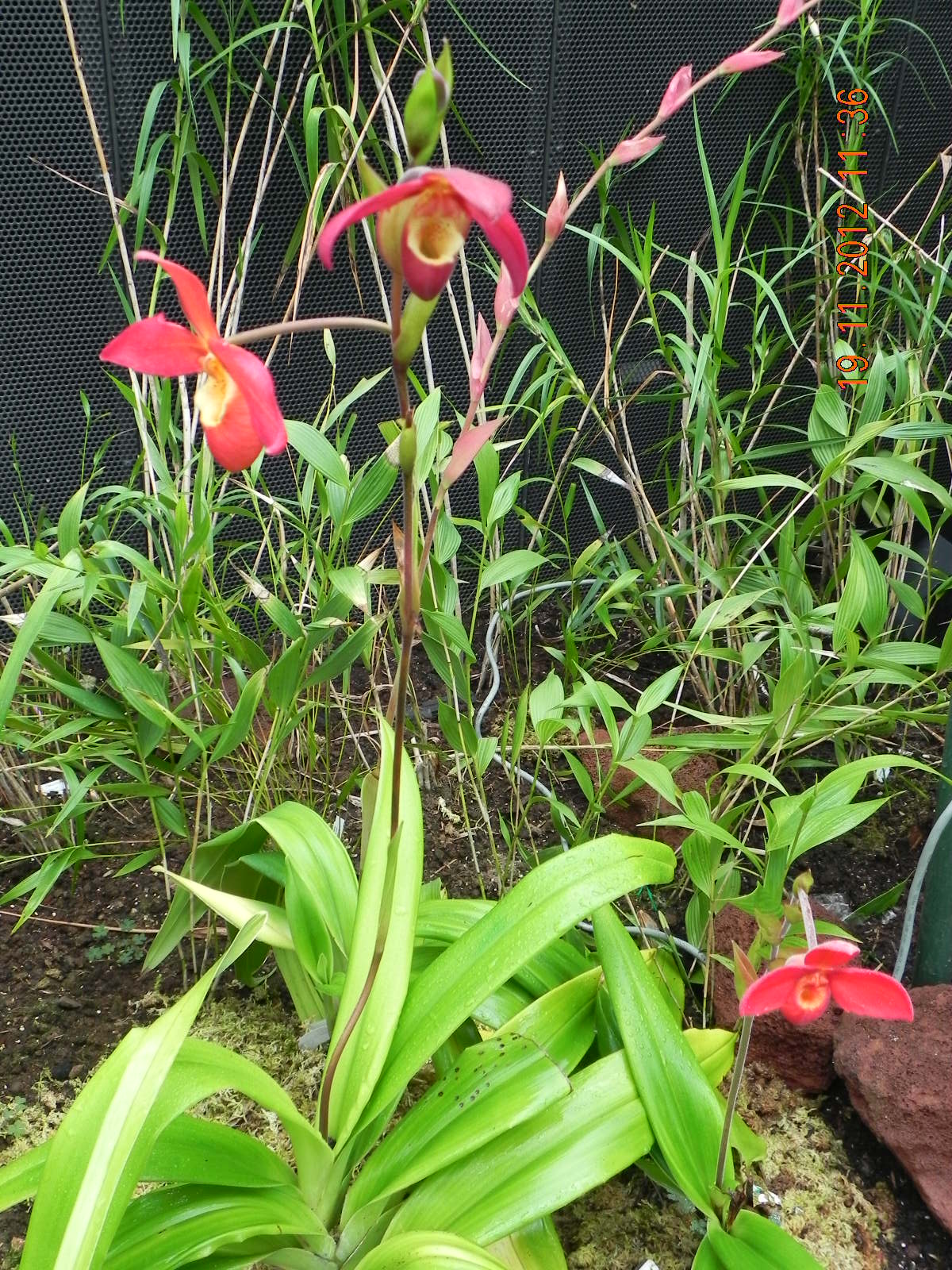
The Lost World is the highest part of the Cloud Forest and up here, there are a number of fascinating plants that never cease to amaze me, such as the following:
- Phragmipedium (Family: Orchidaceae)
- Medinilla (Family: Melastomataceae)
- Paphiopedilum (Common Name: Slipper Orchid; Family: Orchidaceae)
- carnivorous plants Sarracenia (Common Name: North American Pitcher Plant; Family: Sarraceniaceae), Pinguicula (Common Name: Butterwort; Family: Lentibulariaceae), Drosera (Common Name: Sundew; Family: Droseraceae)
- Calanthe cultivars (Family: Orchidaceae)
This is the highest point of the Cloud Forest. Known as The Lost World, it features some of the most interesting plants such as the following:
carnivorous plants
American Pitcher Plant (scientific name: Sarracenia species and cultivars)
Sundew (scientific name: Drosera)
Butterwort (scientific name: Pinguicula)
Pitcher Plant (scientific name: Nepenthes cultivars)
orchid - Miltoniopsis cultivars
gesneriad - Stretocarpella
fern - Adiantum sp.
Rhododendron
Begonia
Today's weather - sunny
I may not have a garden on the ground but I still have lots to say about the plants I grow at home.
The Justicia brandegeeana is really a slow growing shrub. It took this shrub quite some time to grow to this size and produce these inflorescences.
I cannot recall when I bought this sundew plant (scientific name: Drosera cultivar) but perhaps I should try planting this sun-loving carnivorous plant in a terrarium?
The Calanthe orchid has also grew much since a week or two ago.
The variegated Hamelia patens has recently produced some fruits. This photo only showed two black fruits but the actual plant has put out two whole bunches of fruits now.
On the other hand, the fruits of the Gloriosa superba are getting bigger with each day and I am still waiting to see when it would ripen and "explode".
By the way, I have always been intrigued at the leaf branching pattern of the Plumbago species. The branching is just different from most typical opposite or alternate arrangements. The whorled leaf arrangement gives rise to a new stalk of leaves or flowers. Is there a certain advantage or benefit for this type of leaf arrangement, I wonder?
I bought this interesting Begonia from Ang Mo Kio Flora recently and it has been kind to me just yet. A few leaves were damaged by the collection of water on them but other than that, the plant appears to be perfectly happy in the pot.
I guess this is so much for now.