Showing posts with label khaya. Show all posts

17 December 2014

TOWN COUNCIL'S ART

ghost trees in the still of the night
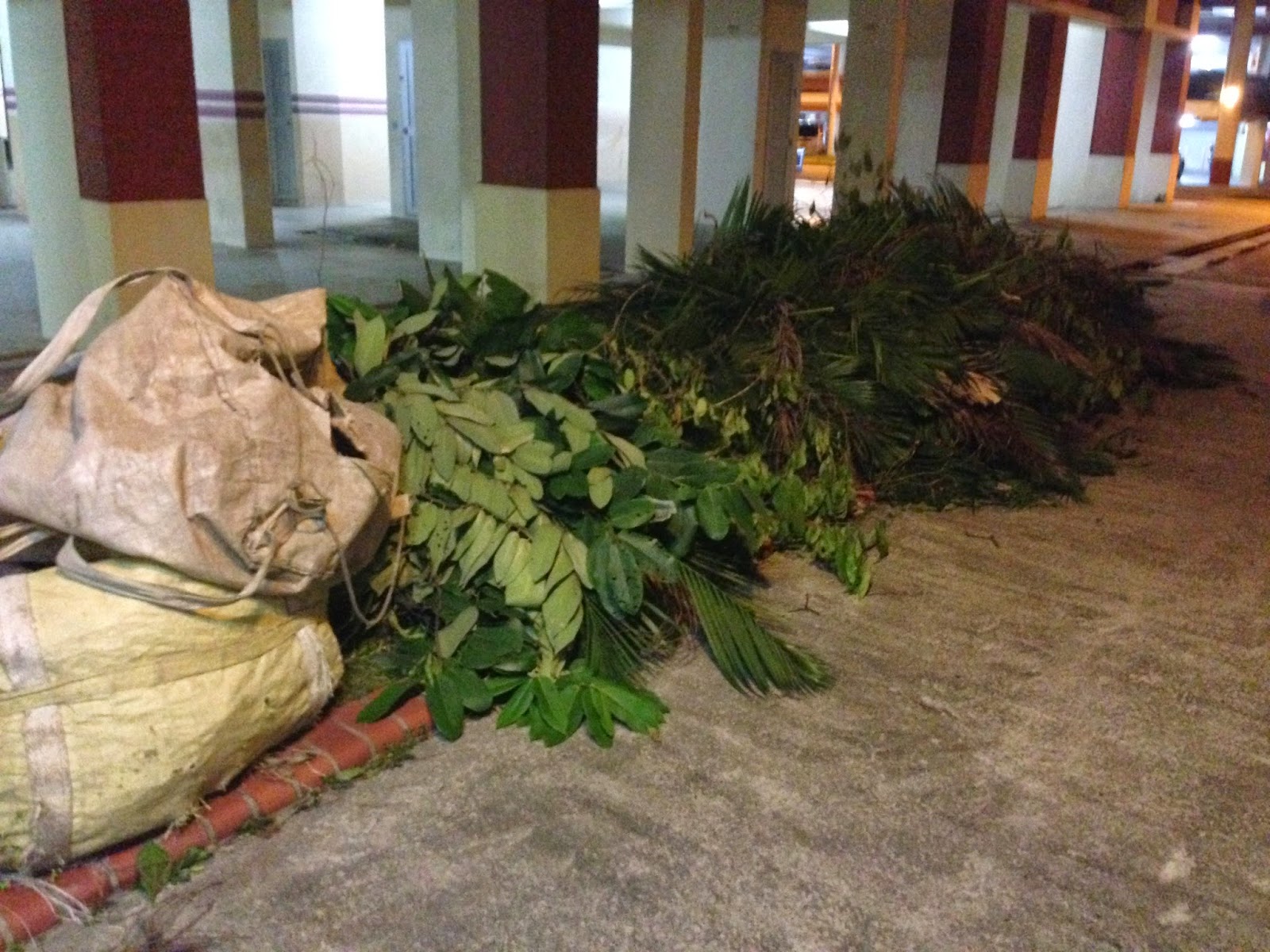
When the red and white tapes were put up around the trees, I knew something was up. True enough, the Town Council carried out an extensive crown reduction of these Khaya trees at my neighbouring garden.

These are the results of the pruning exercise - a loss of shade at some activity spots of the garden such as the fitness corner. 


the stark trees in the day


a yellow Oriole on the left


18 March 2012

FRAGILE FOREST

 Today's weather - sunny
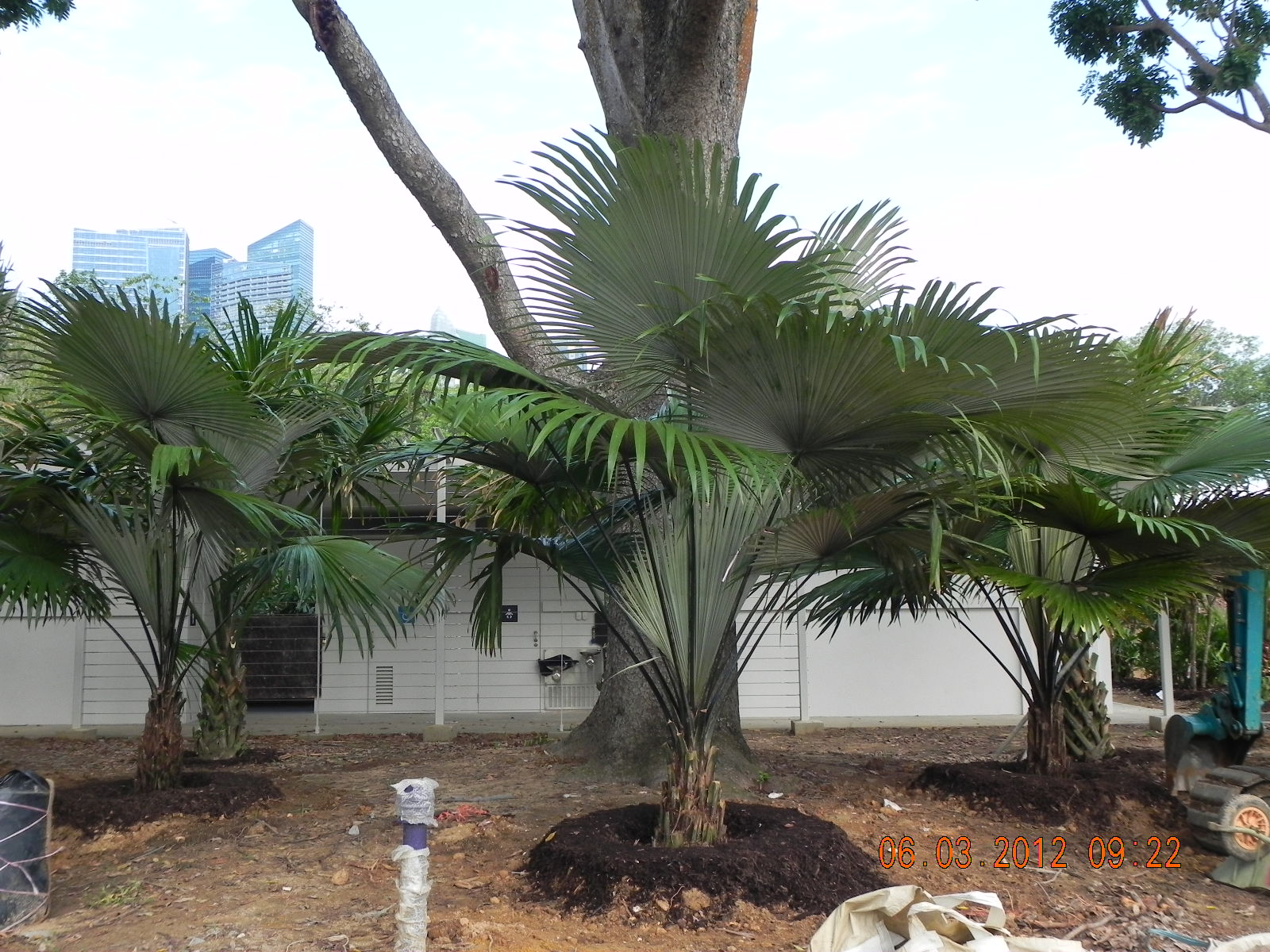
If there is anything that perks me up, it is having the opportunity to plant a bare area and see it come alive and transform into a beautiful landscape. This was precisely what happened at this toilet block area of the Fragile Forest.


I took over the Fragile Forest from a colleague recently and I wasn't the one who planted the palms behind the toilet block and on the slope. When I first came to the site, the bare earth in front of the toilet and below the existing Khaya senegalensis trees made me feel very uncomfortable that I had to plant up this area first.


The theme for this area is palms (Family: Palmae/Arecaceae), so I planted up a number of Kerridoxa elegans (common name: White Elephant Palm, King Thai Palm), which is a fan palm with large fronds with a silverish underside. That immediately gave the place a different look and shielded the dry fronds of the Borassodendron machadonis. Unfortunately, I didn't take any photos before the planting to show the stark difference after the planting. This first set of photos captured the look soon after the palms were in.


I added a clump of Elaeocarpus grandiflorus (common name: Fairy Petticoat, Fringe Bells, Lily of the Valley Tree; Family: Elaeocarpaceae) with red flowers near the southern part of the site and a Elatiospermum tapos (common name: Kra, Perah, Tapos; Family: Euphorbiaceae) beside the car park. 


Subsequently, I added clusters of Areca catechu (common name: Betel Nut Palm), a few Rhopaloblaste singaporensis (common name: Keringtin Palm), Areca vestiara (common name: Orange Crownshaft Palm, Orange Palm, Pinang Merah) which further added to my delighted mood over the week. I was so excited about the bountiful opportunities offered by the site and kept thinking and dreaming about it. I am planning to gradually add the following to this site:

  • a collection of Aglaonema
  • a collection of terrestrial and epiphytic orchids
  • a collection of butterfly host and nectar plants
  • a collection of pitcher plants
  • Caryota mitis
  • Cyrtostachys renda
  • Euterpe oleracea
  • Iguanura species
  • Johannesteijsmannia species
  • Licuala species e.g. L. mattanensis 'Mapu'
  • Phoenicophorium borsigianum
Unfortunately, landscape works at the site have stalled for two weeks now and I hope we can start the remaining planting soon. Updates on the progress of landscaping will be provided gradually and as soon as I can.


10 January 2011

KHAYA SENEGALENSIS

These are the cut ends of the branches of the Khaya senegalensis trees that I posted recently. I was also looking at the surface roots of 2 of these trees.

The compression root and tension root of these 2 trees are quite apparent and I was taught that these roots and the respective compression wood and tension wood grew in response to stress factors e.g. wind from a prevailing direction, to stabilize the trees.

If one of these roots is cut, which tree would be in greater danger of collapsing? The tension root plays a more important part in anchoring the tree, so if it is severed, then the particular tree with this root would likely topple over more easily than the one with the compression root.


KHAYA SENEGALENSIS

I was shocked when I saw this grove of Khaya senegalensis (synonym: Swietenia senegalensis; common name: African Mahogany, Senegal Mahogany; Family: Meliaceae) because this is the first time I saw these trees being pruned after so many years.

It provided a lot of good shade to the passers-by but I supposed the crown reduction was done for safety reasons, much like those along roadside with crowns that were extensively pruned to reduce the load. The silhouette of the trees looked grim against the slightly darkened sky.


05 September 2010

KHAYA SENEGALENSIS

The day ended for me with a golden glow of these Khaya senegalensis (common name: African Mahogany) trees on my way home. What more could I ask for?