Showing posts with label bat. Show all posts

12 June 2016

GARDENS BY THE BAY


Kopsia fruticosa


the fruits of this unknown climber look like bats!


the Russelia looks fantastic!


heron hidden amongst the plants


side view of floral clock

black-leaved Canna and Carphalea


Podranea ricasoliana (Pink Trumpet Vine)


09 April 2014

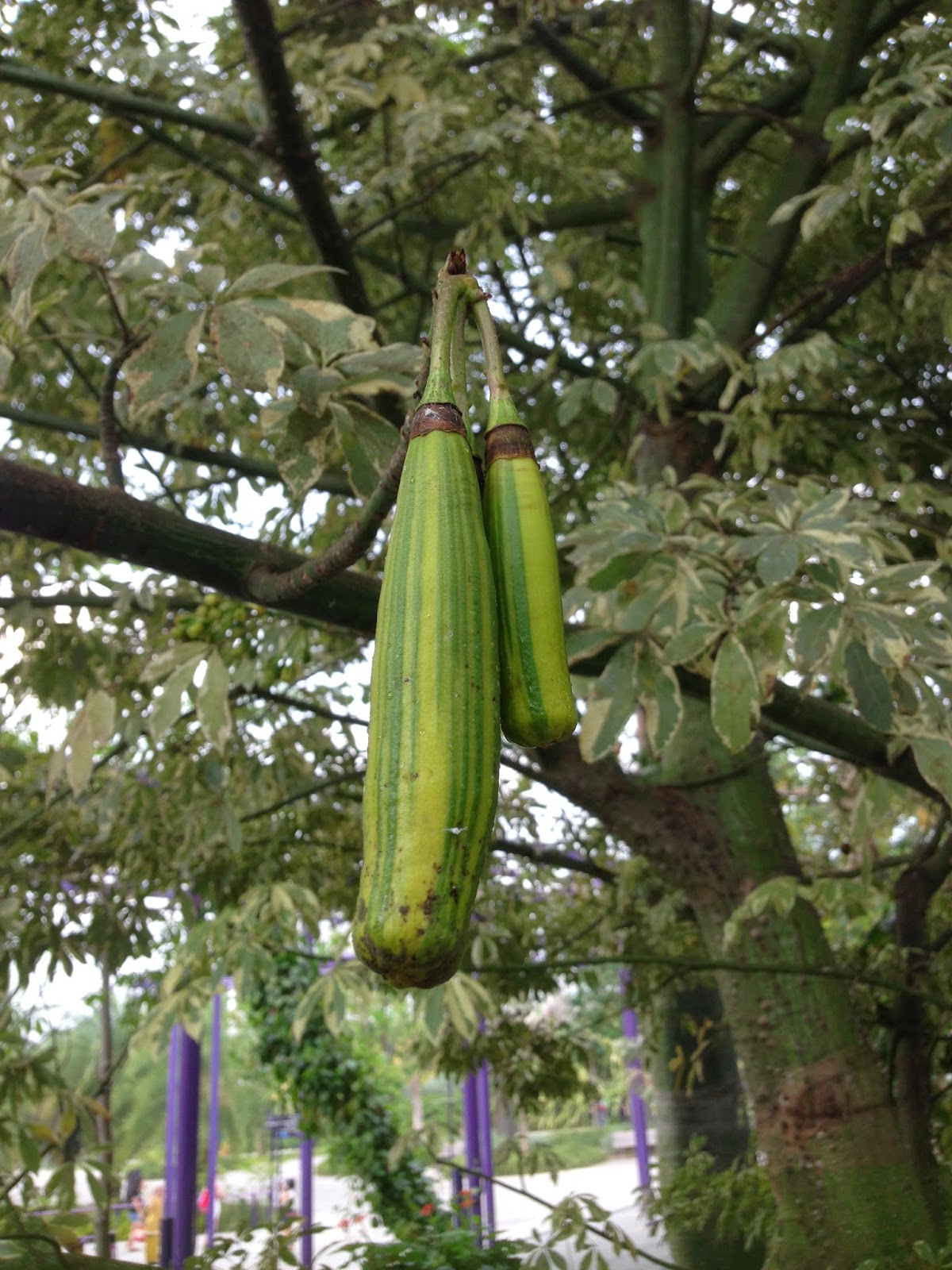
CHORISIA SPECIOSA (VARIEGATED)

Just when I thought I have seen lots of unusual plants, something interesting comes along. I have never actually seen the flowers of the variegated Chorisia speciosa and it is the first time the variegated cucumber-like fruits appear everywhere on these trees at the Hub. I bet the flowers are small, inconspicuously coloured and night-pollinated by bats.


09 October 2013

TODAY (21 AUG 13) PAGE 26 - BAT MAN SEEKS ELIXIR OF LIFE FROM CREATURES OF NIGHT

CELLS CAN SURVIVE SURGES IN METABOLISM
Professor Linfa Wang. Director of the Emerging Infectious Diseases Programme at Duke-NUS, from Hong Kong claims "The most outstanding difference we've seen between bats and other mammals has to do with DNA repair. If the science is as true as we think it is, we can unlock the mechanisms and it can have a huge, huge impact.". So what is all this about and what impact does it have on humans, one might ask?

Well, for one, the secret to longevity may be unlocked soon with all the ongoing research. Studies have shown that the secret to bats' longevity may be linked to their ability to harbour viruses that are deadly to other animals.

Other than the fact that bats are found to be vectors of diseases such as Ebola, severe acute respiratory syndrome (SARS) and the Middle East respiratory syndrome, recently published scientific evidences point to their unique responses to genetic wear and tear, ageing and diseases like cancer. Their low rates of cancer, ability to carry deadly viruses without suffering from it and ability in DNA repair have been proven to be astounding. 

Coming to existence about 50 million years ago and with about 1,100 species across the globe, bats are known to be conduits to spread zoonoses or diseases from vertebrates to humans. According to the United Nations Food and Agricultural Organization, zoonotic diseases account for 60% of new infectious diseases. The viruses are speculated to be latent in the bat carriers which are then transmitted to other mammals, which are genetically closer to or have greater exposure to humans, that subsequently passed on the viruses to humans. A recent classic example is that of SARS, where the diseases was probably passed on to civet cats followed by humans.

The bats' unique abilities may lie with their adaptation of their hearts to switch from just a mere 10 beats per minute during hibernation to 1,000 beats when they are in flight. Physiologically, when this happens, the host's metabolism surges resulting in a lethal and sudden shortage of oxygen while at the same time producing large amounts of toxic metabolic by-products that damage DNA.

In essence, bats cope better with DNA damage repair, are carriers of viruses, have less cancer and typically live longer probably because all these are likely to be interrelated and expressions of a common denominator.

29 August 2010

CATERPILLARS

I had not been looking out for my bat or butterfly friends recently. So I went searching for some of them and I was straining hard against this mass of climbing plants to see if I managed to see some familiar friends.

And I did. I found not just one caterpillar, but instead I found at least 5 Common Rose and 1 Common Birdwing caterpillars of various stages on the Aristolochia acuminata (synonym: A. tagala; common name: Indian Birthwort, Dutchman's Pipe) climber.

The bad news was, none of the 5 bats were around and I hoped there were still around somewhere. Anyway, links on the Aristolochia are below:


11 August 2010

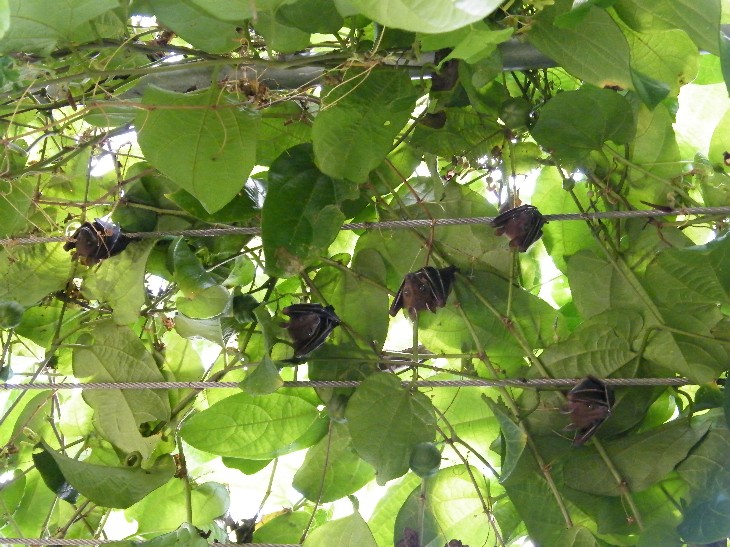
BATS

It started with 2 and grew to 3. And then there were 5.

This site cannot hold so many of you around. Disperse before you are discovered and there wouldn't even be a home for you here.

NB on 12 Oct 10: This is confirmed to be the Common Fruit Bat or Lesser Dog-Faced Fruit Bat (scientific name: Cynopterus brachyotis).

22 June 2009

BAT

I found you on the grass patch on 19 June 09. You looked so small and inconspicuous.

I didn't know how long you were dead but it must not have been too long because you were not decomposed yet.

How old were you? What happened to you? Were you attacked by something? Was that why you were not with the rest of the group?

Good bye, my little friend!