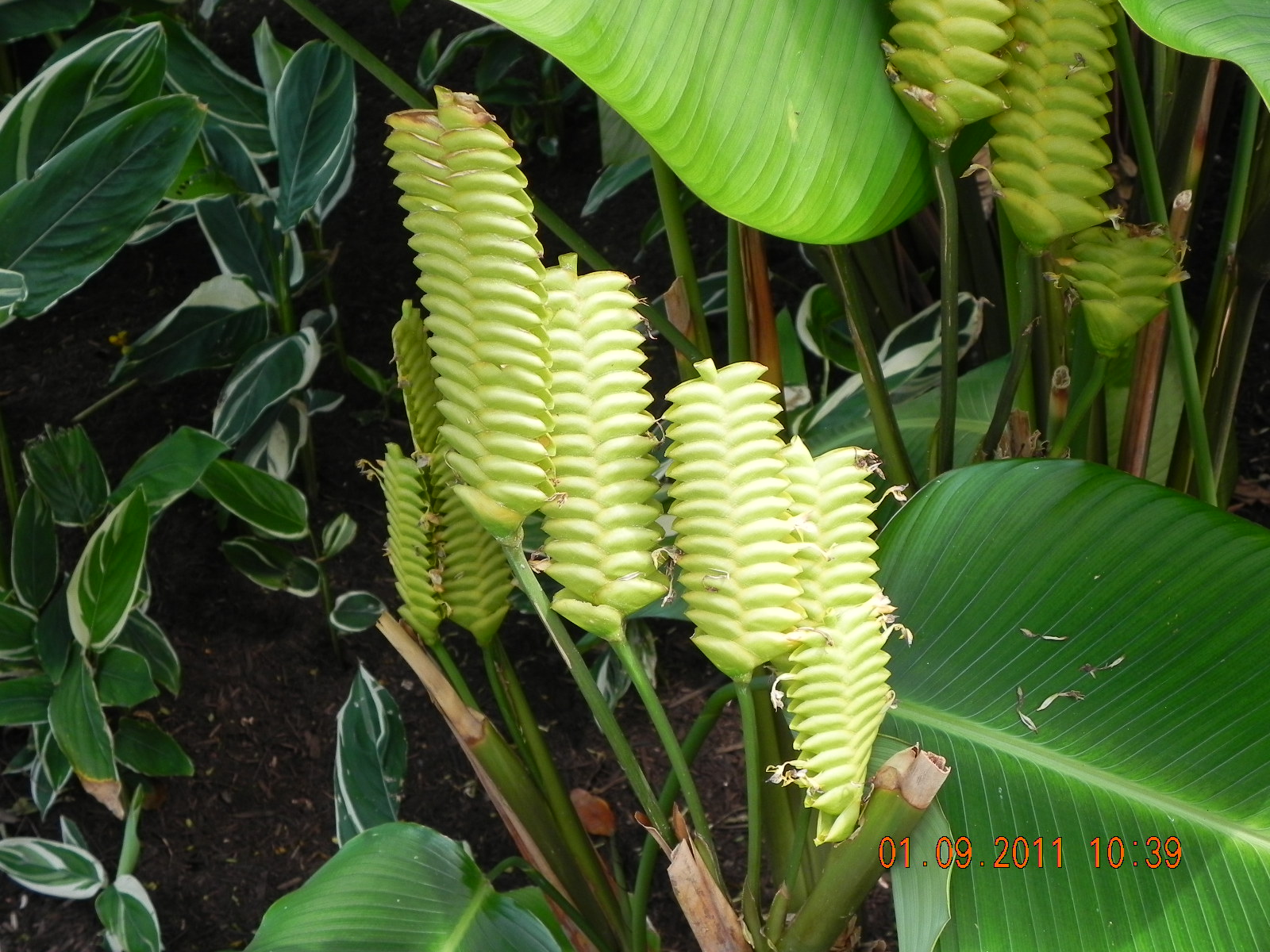
Variegated Fish Tail Palms may not be that uncommon these days but it's always nice to see them in flower or fruit.
Showing posts with label caryota. Show all posts
16 April 2014
11 September 2011
SOUTHERN RIDGES 7
I was on familiar grounds once again. It was so heartening to see the Amesio and Caesal looking so good.
There was also the bed at the base of the bridge that I love so much. Although it wasn't planted by me, I still love to see the contrast between the various plants e.g. Sanchezia nobilis and variegated Sanchezia, variegated Excoecaria cochinchinensis, Ligustrum 'Lemon Lime and Clippers'.
Once again, I don't know the identity of the blue-flower shrub but it reminds me of the Blue Ginger (scientific name: Dichorisandra thyrsiflora; Family: Commelinaceae). By the way, this plant is related to the uncommon Siderasis fuscata (common name: Brown Spiderwort, Bear Ears), which I now know the name. There is also that very beautiful green wall planted with the likes of Philodendron erubescens 'Gold', Caladium bicolor and assortment of Episcia cupreata.
Most of the vegetation is looking so lush and green and even the Trevesia palmata and Caryota zebrina are growing taller than me now.
There was also the bed at the base of the bridge that I love so much. Although it wasn't planted by me, I still love to see the contrast between the various plants e.g. Sanchezia nobilis and variegated Sanchezia, variegated Excoecaria cochinchinensis, Ligustrum 'Lemon Lime and Clippers'.
Once again, I don't know the identity of the blue-flower shrub but it reminds me of the Blue Ginger (scientific name: Dichorisandra thyrsiflora; Family: Commelinaceae). By the way, this plant is related to the uncommon Siderasis fuscata (common name: Brown Spiderwort, Bear Ears), which I now know the name. There is also that very beautiful green wall planted with the likes of Philodendron erubescens 'Gold', Caladium bicolor and assortment of Episcia cupreata.
Most of the vegetation is looking so lush and green and even the Trevesia palmata and Caryota zebrina are growing taller than me now.
17 September 2010
CARYOTA NO
Yesterday, when I passed by the Water Garden, I was shocked to find the inflorescence spike of the Caryota no palm removed. The severed giant whisk was lying on the ground in a dejected state, like me. I was observing its development for months now but it was prematurely removed. What more can I say? When I asked the worker why it was removed, his answer was because they were worried the huge and heavy inflorescence would bring down the palm.
For this single-stemmed palm, the palm would usually die off, much like the Furcraea in the previous post, after its bid to propagate itself. The process of producing such a large flowering and fruiting structure exhausts a lot of energy from the plant and it would not survive the arduous journey.
Now that it has been removed, what would be the plight of the palm? Would it also die off prematurely? I guess I can only watch and observe it.


23 June 2010
CARYOTA NO
Wow, this single-stemmed Giant Fishtail Palm recently sent out this huge inflorescence spike.It looked like a humongous whisk carried by pugilistic nuns shown in chinese martial arts movies. The flowers have not fully opened, so I would be posting the flowers or even fruits in time to come.
Usually after the flowering, I think it would die off. So we will wait and see.


Subscribe to:
Posts (Atom)