Showing posts with label gramineae. Show all posts

19 March 2012

BISHAN PARK 1

I started off this post with a photo of the weed Asystasia gangetica 'Alba' (common name: White Ganges Bluebell; Family: Acanthaceae) for Bishan Park 1 because after the completion of the PUB and NPark's ABC project, this is a wildflower haven. It is a wonderful place to study various species of beautiful wildflowers such as the Melinis repens (common name: Natalgrass, Rose Natal Grass, Natal Redtop; Family: Poaceae/Gramineae).


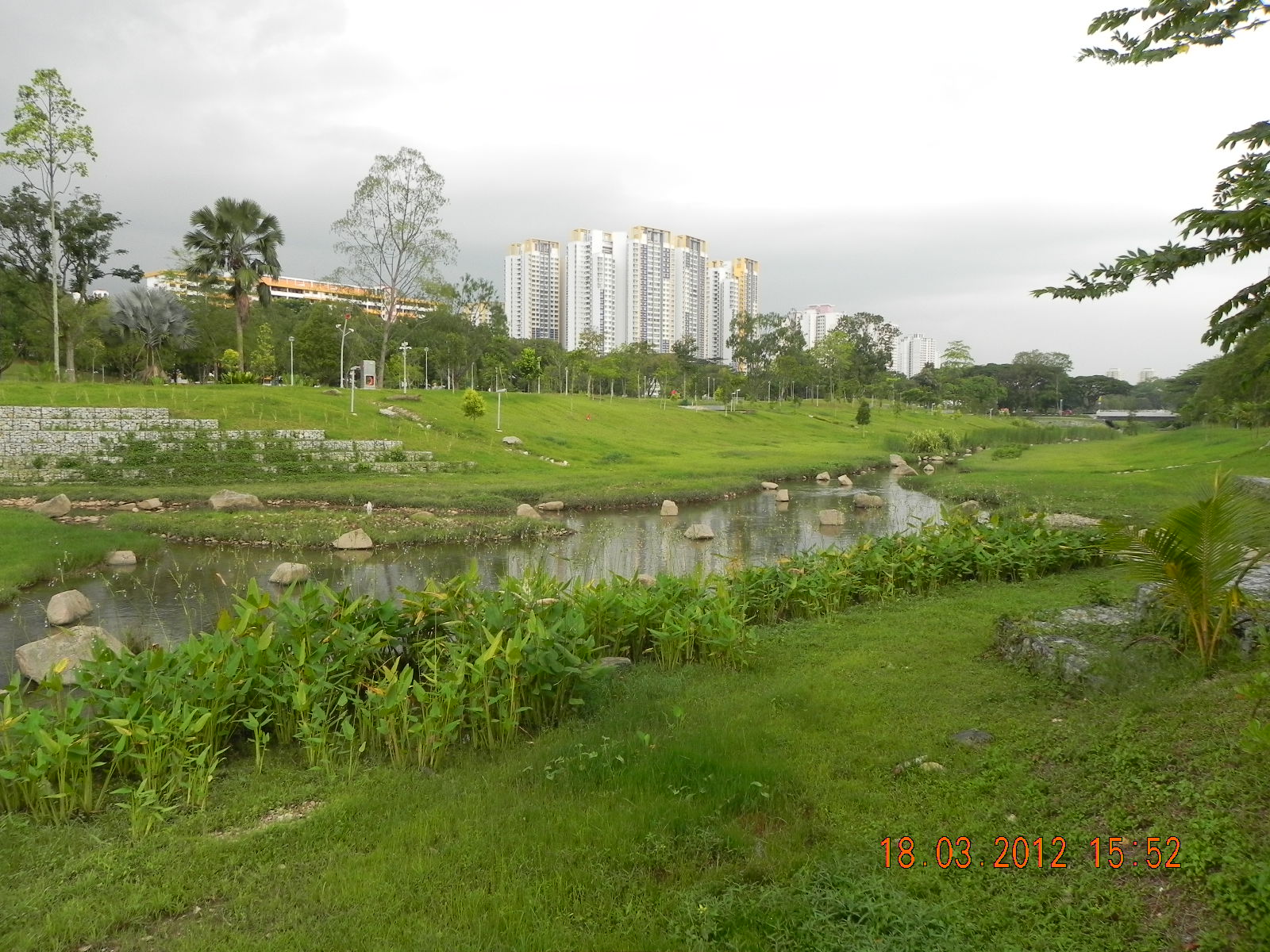
I love the new look of the park, with numerous meanders and riverside submergent and marginal plants and so on. I mentioned it before that I love water features and the riverscape is so riveting because it reverts to a more natural look reminiscent of the past, before city-scrapers and high-rise buildings come into the picture. The former concretised monsoon drain was hacked away to make way for this high capacity river that caters to those once in a hundred years kind of floods. With heavy rains, the water level will rise and the marginal plants will be temporarily swallowed by the rising waters. When this happens, the river functions as a temporary flood plain and reservoir to hold the swelling waters until the rain ceases and the water levels drop. I think all these are so cool!


Red markers are dotted along the river and sirens will be activated to warn the park users to avoid the swollen channels when the water levels rise to the markers. To cross the river, there are bridges or stone pavers in the water for users to walk on. In fact, this is an excellent habitat for freshwater flora and fauna and organisms and for researchers to study about them. Just look at the clutches of pink eggs of the Apple Snail, even if they are non-desirable. Sometimes, one can see shorebirds wading and feeding in the shallow waters. 


Existing trees such as the Mesua ferrea (common name: Ceylon Ironwood, Indian Rose Chestnut; Family: Clusiaceae) are retained to provide shade and aesthetics and new plant additions are introduced into the landscape to create interest and diversity. 


I was enjoying myself but had to quickly leave the park and hurry to my next destination when the dark clouds in the sky rowed towards my direction and it started to drizzle.


28 September 2010

PANICUM & THYSANOLAENA

I was told the first 2 photos show the perennial grass known as Panicum maximum (synonym: Megathyrsus maximus), which are known commonly as Guinea Grass or Green Panic Grass.


The 3rd photo shows the grass Thysanolaena latifolia (synonym: T. maxima, Agrostis maxima, Melica latifolia, T. agrostis, T. textilis). The common names are interesting and include Tiger Grass, Asian Broom Grass and Bamboo Grass. A link on this beautiful grass is as attached:
By the way, all grasses are now classified under the Family Poaceae (Gramineae).

22 September 2010

VARIEGATED GRASS

What variegated grass is this? I have absolutely no idea at all. But the seed head confirmed its identity as belonging to the Poaceae (Gramineae) Family.

29 August 2010

PANICUM MAXIMUM (VARIEGATED)

Grasses are now in the Family Poaceae (formerly Gramineae). I find it hard to get used to the changes and sometimes lose track of it.

Anyway, ornamental tufted grasses have been gaining popularity and acceptance in recent years and it is not difficult to understand why. From the small beautiful Ruby Grass (scientific name: Melinis nerviglumis) with panicles of purple flowers, to this variegated grass with panicles of wispy white flowers that sway gracefully with the wind, their long, narrow and elongated leaves coupled with the flowers have a certain understated beauty and soft look that cannot be achieved with other plants.

Seeing is believing, so visit the Car Park Garden to check out this new grass, which I believe to be a variegated form of the Panicum maximum (common name: Guinea Grass).


04 March 2010

RHYNCOSPORA COLORATA

Twinkle twinkle little stars, how I wonder how you are?

Known as Star Grass from the Poaceae (formerly Gramineae) Family, they loved waterlogged sites and can be planted in marshy areas. Each individual flower is so pure and white.

To maintain it, they need to be pruned back heavily and allowed to grow back into a compact bushy plant.