Showing posts with label clusiaceae. Show all posts

19 March 2012

BISHAN PARK 1

I started off this post with a photo of the weed Asystasia gangetica 'Alba' (common name: White Ganges Bluebell; Family: Acanthaceae) for Bishan Park 1 because after the completion of the PUB and NPark's ABC project, this is a wildflower haven. It is a wonderful place to study various species of beautiful wildflowers such as the Melinis repens (common name: Natalgrass, Rose Natal Grass, Natal Redtop; Family: Poaceae/Gramineae).


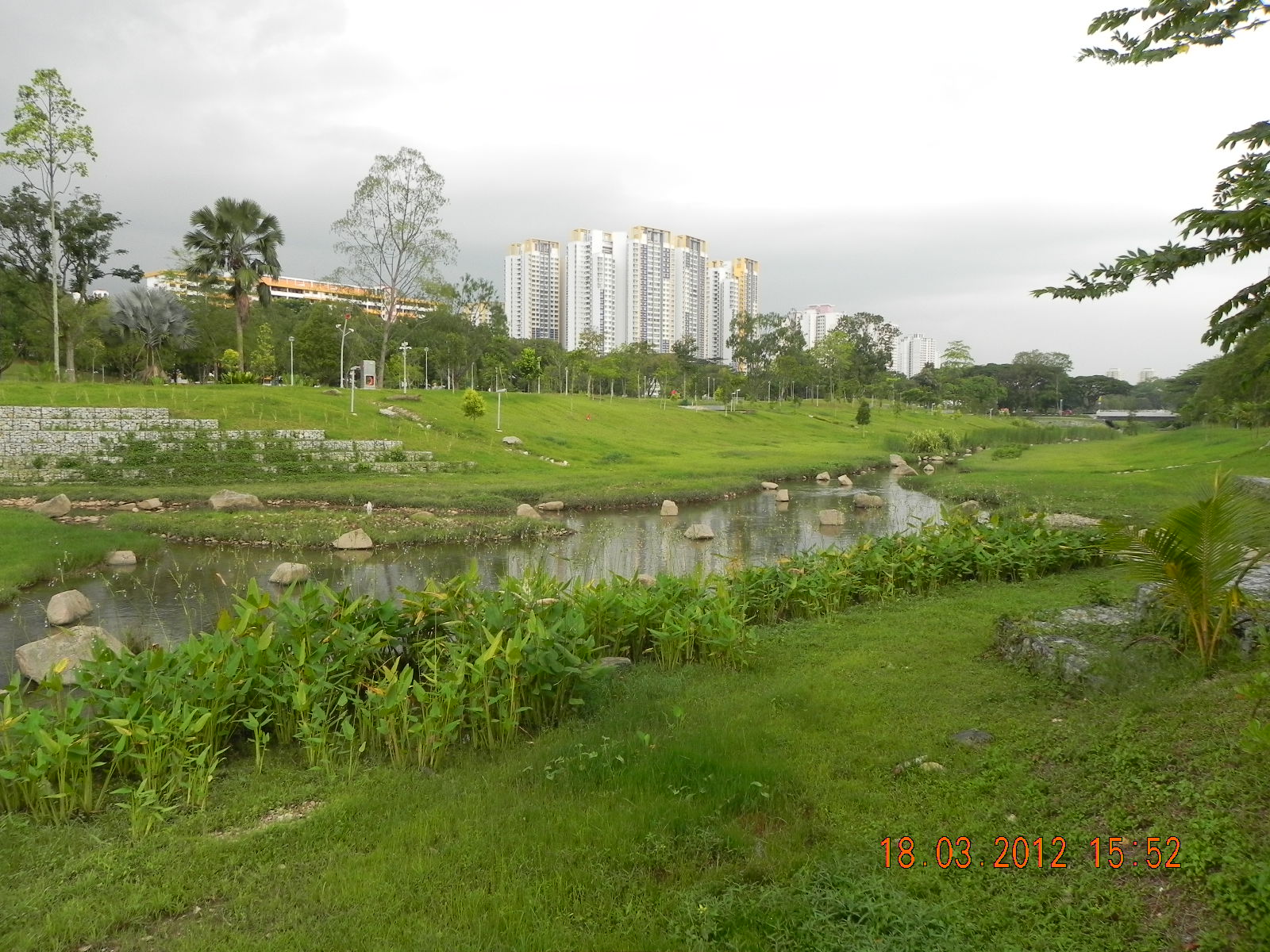
I love the new look of the park, with numerous meanders and riverside submergent and marginal plants and so on. I mentioned it before that I love water features and the riverscape is so riveting because it reverts to a more natural look reminiscent of the past, before city-scrapers and high-rise buildings come into the picture. The former concretised monsoon drain was hacked away to make way for this high capacity river that caters to those once in a hundred years kind of floods. With heavy rains, the water level will rise and the marginal plants will be temporarily swallowed by the rising waters. When this happens, the river functions as a temporary flood plain and reservoir to hold the swelling waters until the rain ceases and the water levels drop. I think all these are so cool!


Red markers are dotted along the river and sirens will be activated to warn the park users to avoid the swollen channels when the water levels rise to the markers. To cross the river, there are bridges or stone pavers in the water for users to walk on. In fact, this is an excellent habitat for freshwater flora and fauna and organisms and for researchers to study about them. Just look at the clutches of pink eggs of the Apple Snail, even if they are non-desirable. Sometimes, one can see shorebirds wading and feeding in the shallow waters. 


Existing trees such as the Mesua ferrea (common name: Ceylon Ironwood, Indian Rose Chestnut; Family: Clusiaceae) are retained to provide shade and aesthetics and new plant additions are introduced into the landscape to create interest and diversity. 


I was enjoying myself but had to quickly leave the park and hurry to my next destination when the dark clouds in the sky rowed towards my direction and it started to drizzle.


16 January 2011

CALOPHYLLUM SOULATTRI

The Calophyllum soulattri, from the Family Clusiaceae, at HortPark's Flora Stitches were producing new leaf flushes of red recently. It is a tree that is worth introducing into the landscape to give some colour.


12 October 2010

CRATOXYLUM FORMOSUM

There is a row of Cratoxylum formosum (common name: Pink Mempat; Family: Clusiaceae) planted along the Albert Mall in front of the La Salle College of the Arts.

This tree is deciduous and these are photos of the beautiful leaves and flowers.


12 September 2010

CRATOXYLUM COCHINCHINENSIS

This is a tree from the Clusiaceae Family. I did not capture it but its new leaf flushes are pinkish and the peeling bark is an orangey brown. The leaves also have a drooping effect on the dome-shaped crown. In addition, it is a host plant for some native butterflies.

So this is definitely a tree worth planting in the landscape.

03 September 2010

CRATOXYLUM MAINGAYI

This is an uncommon Cratoxylum maingayi from the Clusiaceae Family.

I call this the Singapore Sakura because the pink flowers and red new leaf flushes remind me of the cherry blossom and are the main appeal of this deciduous tree. The flowers look fake but they are all real and attracted the day-flying moth to it.

The flowering is not synchronous in that not all trees within the same vicinity flower at the same time. These few trees at the Pasir Panjang Road entrance are often chlorotic but it seemed like the more chlorotic they were, the more frequent it flowers. Is it possible that the stress triggered off the flowering? Typically before flowering, the leaves are shed and when the new red leaves are out, the flower buds appear too.