The first set of photos were taken on 15 Oct 2012 and these two Hibiscus were displaying the symptoms of severe nutrient deficiency. They were in a very bad state and the younger and older leaves were all showing interveinal chlorosis and possessed yellowish leaves. There were barely any flowers.
Now, after months of treatment to incorporate straight fertilizers in Nitrogen, chelated Iron and Magnesium as well as organic fertilizers to the soil, the two Hibiscus have recovered significantly and are now spotting lots of flowers, at least when compared to before.
Nutrient deficiencies in Iron are commonly seen in acid loving plants such as Wrightia religiosa and Gardenia etc.
Alright, the title is a bit generic but sometimes I am too lazy to think of a better description.
The first two photos show an unusual silver-leaved Barleria. Next is a rather unique variegated Scaevola taccada (common name: Beach Cabbage, Sea Lettuce).
On the trunks of the various Dipterocarpus trees were also clumps of the Dendrobium crumenatum (common name: Pigeon Orchid). Too bad the orchids were not flowering at the time when the photos were taken.
At another side of the nursery were several Euclinia longiflora (synonym: Randia macrantha; common name: Tree Gardenia), where some were in bloom and the numerous pendulous flowers.
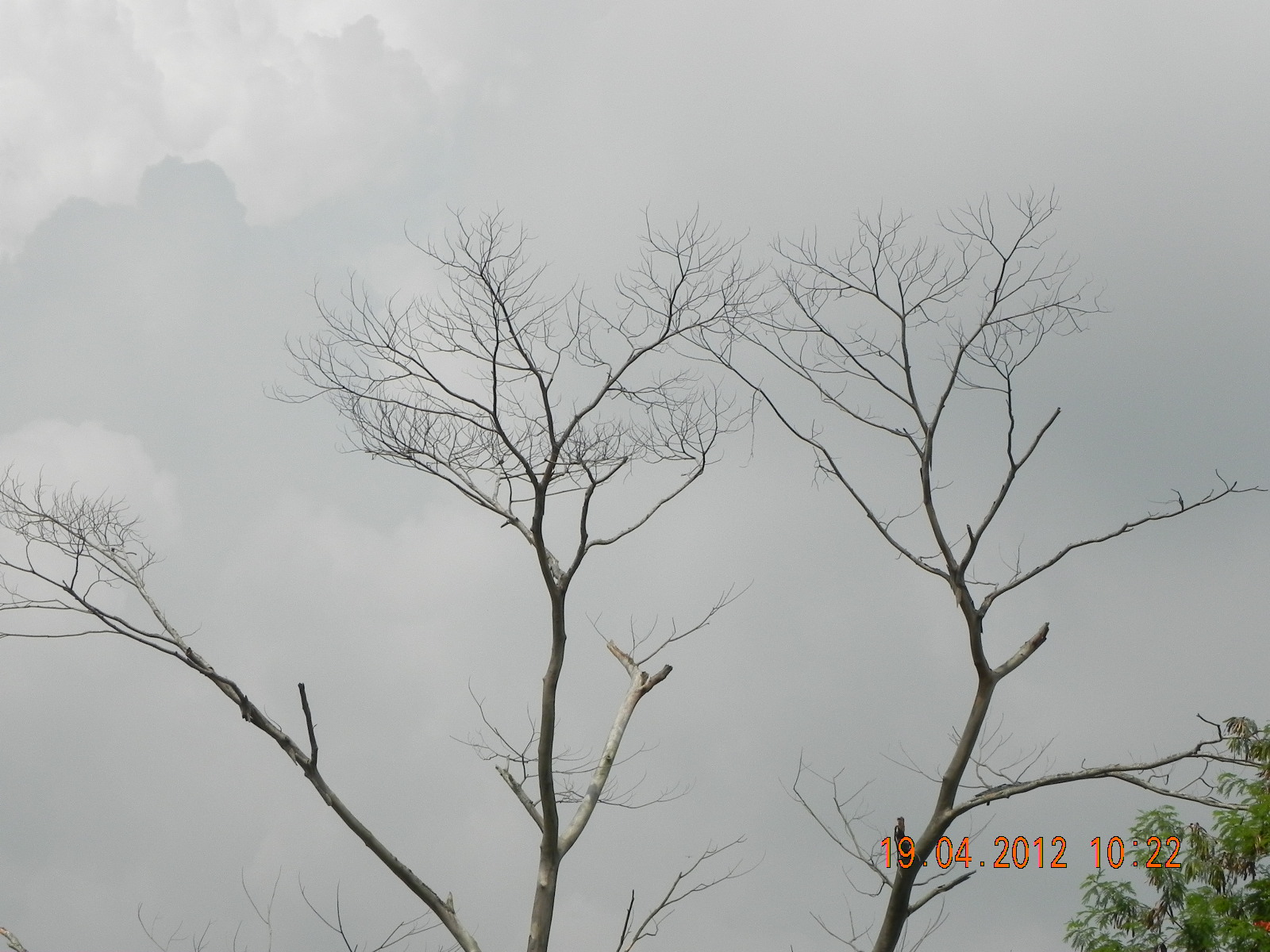
Whenever I am at the state lands, I would look past the immediate greenery and find beautiful, architectural stands of the Albizzia falcarata in the background. Their sinewy and weak branching makes it an unsuitable roadside tree. Even when they are dead, the tree crown is also quite artistic.
Finally, I came across this native Cerbera odollam (common name: Pong Pong), where the main trunk meandered across the ground to create a very unique photographic opportunity for photographers. The arching branch reminds me of a similar trunked Tembusu tree on the Singapore $5 dollars note. Well, this former tree already has its location pre-selected and would not be used in the area where I am currently planting up.
The Gardenia gjellerupii was flowering again in the Golden Garden and that set my heart fluttering with excitement.
However, I was mortified by the severe nutrient deficiency displayed by the very beautiful tree. The interveinal chlorosis was apparently quite serious.
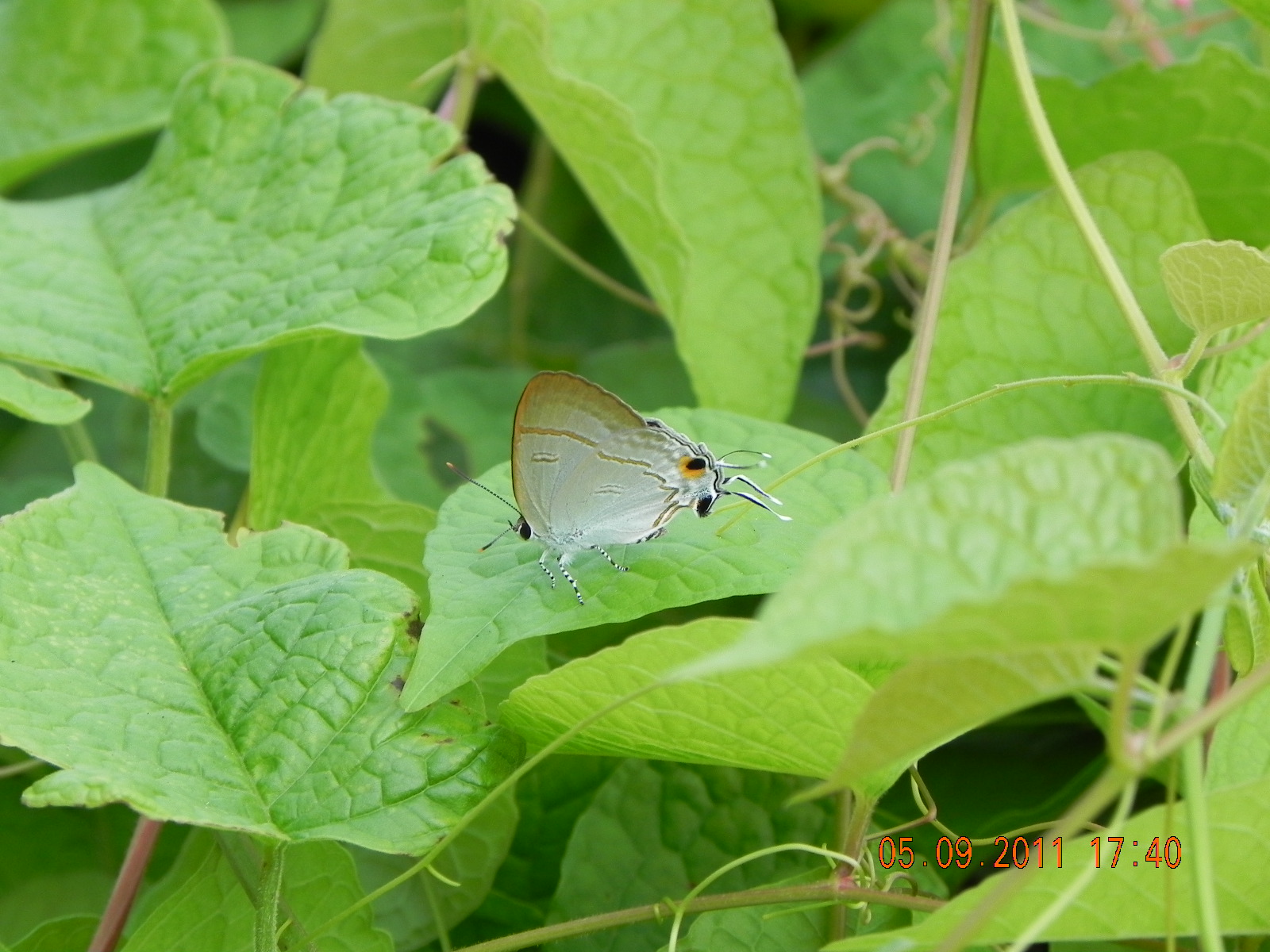
Some distance away from this part of the garden, I saw the Common Tit (scientific name: Hypolycaena erylus teatus) butterfly on the leaves of the Antigonon leptopus, where it was wriggling its two tails on its hind wings. Across the other side, I am still in awe by the beautiful coloured leaves of the Bauhinia semibifida var. perkinsae, where the red Russelia flowers took a peek from amongst its leaves.
The Ficus has also started sending down its aerial roots.