
Showing posts with label myrsinaceae. Show all posts
Showing posts with label myrsinaceae. Show all posts
10 November 2013
ARDISIA PYRAMIDALIS

13 November 2012
SECRET LIFE OF TREES

This native Aralidium pinnatifidum tree (Family: Aralidaceae) with interesting pinnately-lobed leaves flowered recently. As observed from the photos, the inflorescence is a panicle with small creamy unisexual flowers.
I am certain that the next tree is an Ardisia (Family: Primulaceae) although I have yet to find out the specific epithet. The pendulous compound umbel inflorescence bears lovely fuchsia pink flowers that caught my attention from afar. How pretty they look!
Anyway, under the APG III (Angiosperm Phylogeny Group) flowering plant classification system, the former Myrsinaceae is no longer recognized and it is now placed under the Primulaceae Family.


06 December 2011
FLOWER DOME PART 1

- 500 years old flowering Camellia japonica (Family: Theaceae)
- Fuchsia cultivars (Family: Onagraceae)
- holly Ilex (Family: Aquifoliaceae)
- Chilean Wine Palm Jubaea chilensis (Family: Arecaceae)
- numerous herbaceous perennial Heuchera cultivars (Family: Saxifragaceae)
- numerous perennial Cyclamen cultivars (Family: Myrsinaceae)
- Rhododendron cultivars (Family: Ericaceae)


11 October 2010
ARDISIA PYRAMIDALIS
 This is an uncommon Ardisia pyramidalis (common name: Marlberry) from the Myrsinaceae Family. It was planted at the male toilet area of the Singapore Botanic Garden HQ Visitor's Centre.
 I whipped out my camera and continued snapping the photos of this plant to the disregard of those in the toilet. They must think I was crazy.
Unlike the more common Ardisia elliptica, the panicle in this species is so huge and bears so many pink flowers.


02 September 2010
ARDISIA ELLIPTICA
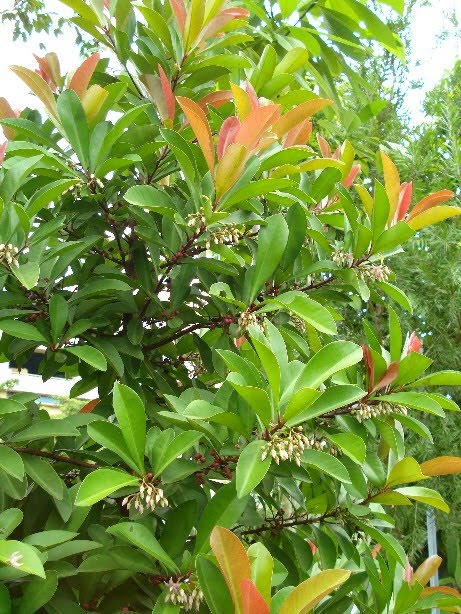 This is a highly common native plant with beautiful new leaf flushes, small pink flowers and stunningly red to black berries.
This back mangrove plant from the Myrsinaceae Family has an interesting common name Shoebutton. Ecologically, it is an important host plant for some butterflies and the local butterfly Harlequin (scientific name: Taxila harquinus harquinus) is facing the threats of extinction because of the disappearance of its habitat and breeding sites. Information on this plant and the butterfly can be found in the links below. Mr Khew's website Butterfly Circle provides lots of information on and photos of butterflies. It is definitely a site worth checking out and reading.


07 August 2010
ARDISIA GIGANTIFOLIA
 This is a very interesting member of the Ardisia genus, which is the largest in the Myrsinaceae Family.
It seems the rhizomes of this plant has numerous phytochemicals e.g. saponins, that are harvested for the medical industry.
Horticulturally, this slow-growing Ardisia has obviously bigger leaves than other members of this genus. It prefers shady conditions and under the dim light, the leaves develop a dark bluish-black tinge to it, especially on the underside. The lighter midrib and veins provide a strong contrast with the colour of the leaf blade. The texture of the leaves are also interesting to the touch.
Even without flowers, this Ardisia is a handsome plant to use in a shady area of the garden.
Subscribe to:
Posts (Atom)