I planted this mangrove Lumnitzera (Family: Combretaceae) at the Discovery slope some time ago and I am always happy to see the vibrant clusters of red flowers.
Showing posts with label combretaceae. Show all posts
26 October 2014
06 March 2012
HORTPARK 1
Today's weather - sunnyThese beautiful landscape and plant photos were taken at HortPark recently.
The first few photos taken at the Floral Walk show the very beautiful and unusual ginger Tapeinochilos ananassae (common name: Indonesian Wax Ginger; Family: Costaceae).
The next few photos show one of my favourite tropical plants, the Megaskepasma erythrochlamys (common name: Brazilian Red Cloak; Family: Acanthaceae), that I often use in my landscape projects. I definitely feel it is under-appreciated and underused in landscaping.
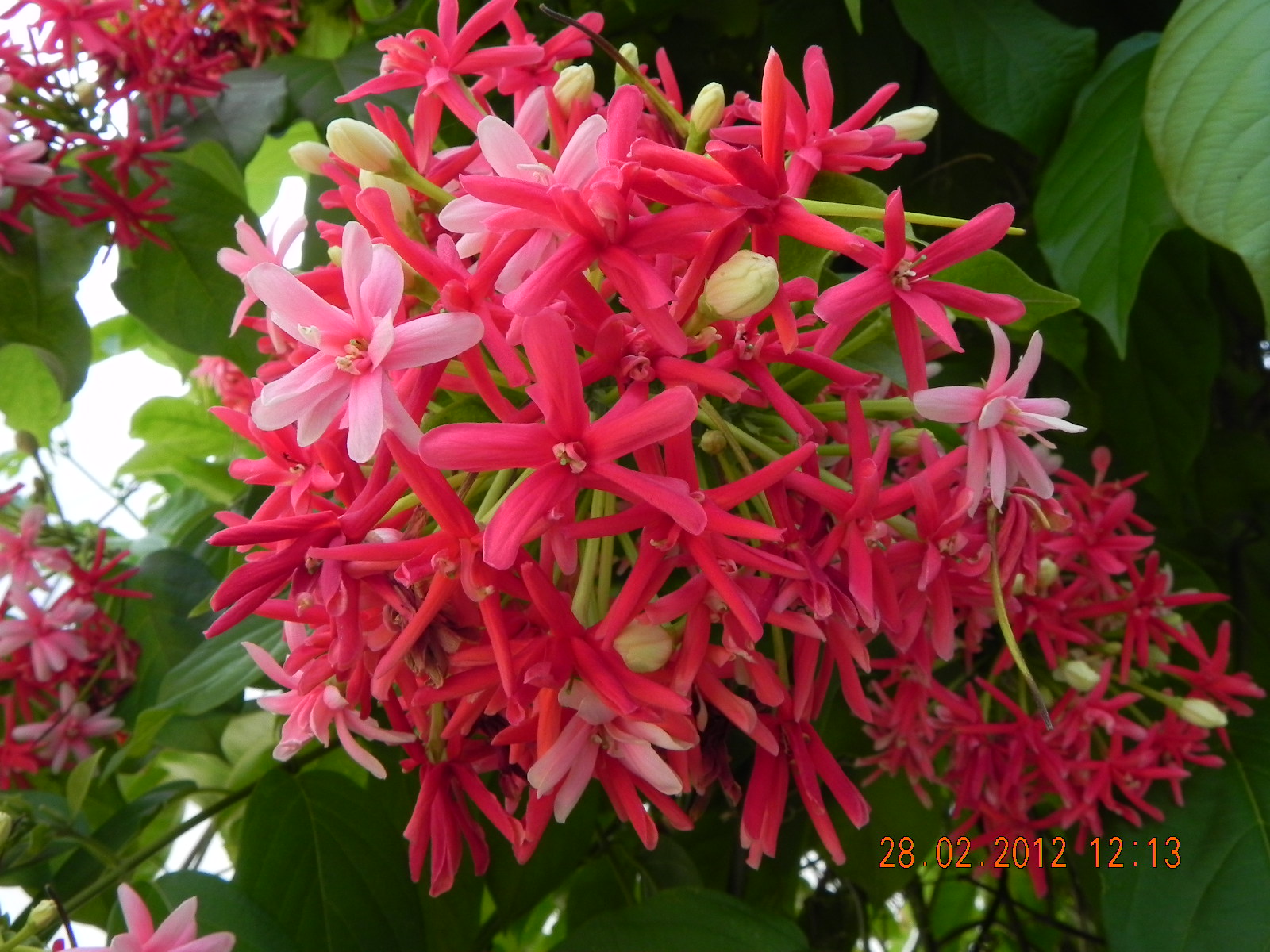
Over at the Prototype Glasshouses, the double petaled Quisqualis indica (common name: Drunken Sailor, Rangoon Creeper, Chinese Honeysuckle, Scarlet Rangoon; Family: Combretaceae) is putting out its best display to maximum effect. Who wouldn't fall in love with such an amazing climber with bunches of pendulous fragrant flowers? I don't need to be a sailor to be bewitched by it.
I also saw this unknown bird on the Ascelpias curassavica (common name: Blood Flower; Family: Apocynaceae) at the Golden Garden. Interestingly, I don't think I have seen this bird before.
Beside this garden were lots of fluttering butterflies hanging around the numerous nectar plants, such as the Leopard butterfly feeding on the nectar of the Lantana camara or Cnidoscolus chayamansa (synonym: C. aconitifolius; common name: Maya Spinach Tree; Family: Euphorbiaceae). It is certainly not surprising, considering that this is the outdoor garden of the Butterfly Garden. I also spotted the skittish Cycad Blue or Plains Cupid (scientific name: Chilades pandava; Lycaenidae) butterfly on the Antigonon leptopus (common name: Honolulu Creeper, Coral Vine, Mexican Creeper; Family: Polygonaceae).
Every time I visit this park, I am always rewarded with something pleasant that brightens up my day if I am patient enough to pay attention to my surroundings.
20 February 2011
TERMINALIA CATTAPA
This is one of the biggest trees here with large autumn-shade leaves. In fact, the leaves contain tannins and flavonoids and can be used in aquariums to lower the pH of the water when keeping freshwater fishes that prefer slightly acidic waters.
A link on the tree is shown here:
19 October 2010
TERMINALIA CATTAPA (VARIEGATED)
The Terminalia cattapa (common name: Sea Almond, Ketapang) from the Combretaceae Family is very commonly planted in Singapore, especially at coastal areas.The large tree with huge buttress roots can grow quite tall and its big deciduous leaves turn orangey-red and shed at certain times of the year, giving an impression of autumn. Someone once said to me that Ketapangs never fail, implying that these trees are typically very stable with its highly supportive roots and very rarely fall over.
In fact, the leaves have another useful application in freshwater aquariums in that the leaves in the tank water would increase the acidity or reduce the pH to a level suitable for keeping some fishes.
Subscribe to:
Posts (Atom)