Showing posts with label scale. Show all posts

24 February 2014

HOUSEPLANTS

I couldn't stand the unkempt peacock-like Plumbago anymore and decided to give it an extreme haircut. I headed back the entire plant so it was almost leafless. 

As for the Lime plant, it has grown considerably taller but didn't seem to attract anymore Lime Butterflies and instead hosted so many white flies, so I brought it to the garden.

The Periwinkle was also suffering from the drying effects of the current weather and it's almost bare stems hung limplessly over the wall. So I had to prune back most of its stems. If it's not recovering, which I thought so, then I would harvest the seeds and chuck the plant away to make room for the younger seedlings.

Finally, the variegated Aptenia grew so much but there were only a handful of flowers and a number of scales pests. I suspected it took up a lot of my soil fertilizer nutrients. I ended up collecting more than a kilogram of it and brought it to the garden for planting. 

The straggly Periwinkle

The variegated Aptenia cordifolia


24 December 2012

RUSSELIA EQUISETIFORMIS

No prizes for guessing what plant this is since I already revealed the name above. 

Typically, the Russelia equisetiformis (Common Name: Firecracker Plant; Family: Plantaginaceae) leaves are often reduced to just a small scale-like growth on thin stems. Occasionally, a stem with whorled serrated leaves appear instead. I wonder when it decides to send up what types of leaves. 

12 March 2012

HORTPARK 3

Unlike the two earlier posts on HortPark, this one focuses more on pests and diseases and nutrient deficiency symptoms.

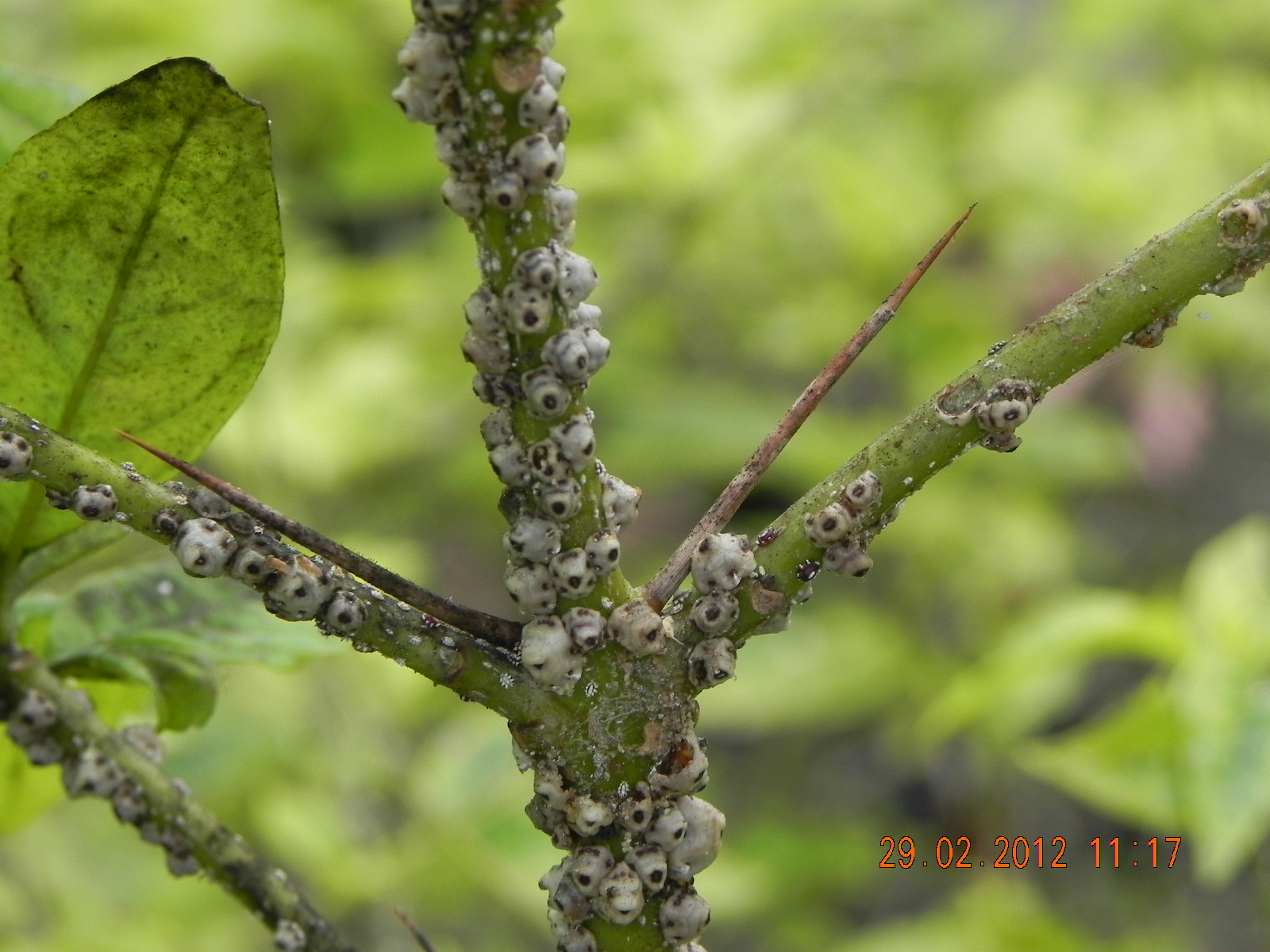
There is a wide range of scale insects shown here. Some even look like barnacles on the stems and branches of the plants. The blackish soot-like layer on the leaves is the sooty mould, brought about by the scale insects. Usually, sucking insects like scales, aphids, mealy bugs secrete a honey dew-like substance that attracts ants. The ants harvest the substance and in turn farm these insects and protect them from other predators.


There was also a grasshopper, spotted on the leaf of a Canna plant, which typically chews the leaves causing extensive damages.


The variegated and non-variegated Manihot esculenta (common name: Tapioca) is also a nest bed of mealy bugs.


The leaves of the Diospyros malabarica tree were also badly damaged by the Bagworms.


The 3 stages of the Ladybird were also captured by the camera. Who would have thought that their larval stages look entirely different from the winged insect?


The reddish edge of the leaves of this particular Tristaniopsis whiteana tree was showing symptoms of possibly phosphorus deficiency.


Hispid beetles were found on the badly damaged fronds of the Coconut Palm.


Finally, this alien like moth caterpillar, which I captured before, was busy eating the leaves of the Ardisia elliptica.


14 April 2011

DUXTON PLAIN PARK - PART 1

I used to manage this linear park and I was there recently. Surprisingly or should I say not surprisingly, there is still a lot of biodiversity in this often overlooked park.

There were lots of Common Grass Yellow fluttering amongst the plants e.g. Caesalpinia pulcherrima. In fact, I saw at least 3 grasshoppers and many scale insects on a grove of Pseuderanthemum reticulatum shrubs. Nearby, there was a cute orange ladybird which played hide-and-seek with me. When I tried to take photos of it, it would crawl over the leaf surface and when I flipped the leaf over, it crawl over it and this was repeated over and over until I finally managed to take these few shots before it disappeared from my view again.

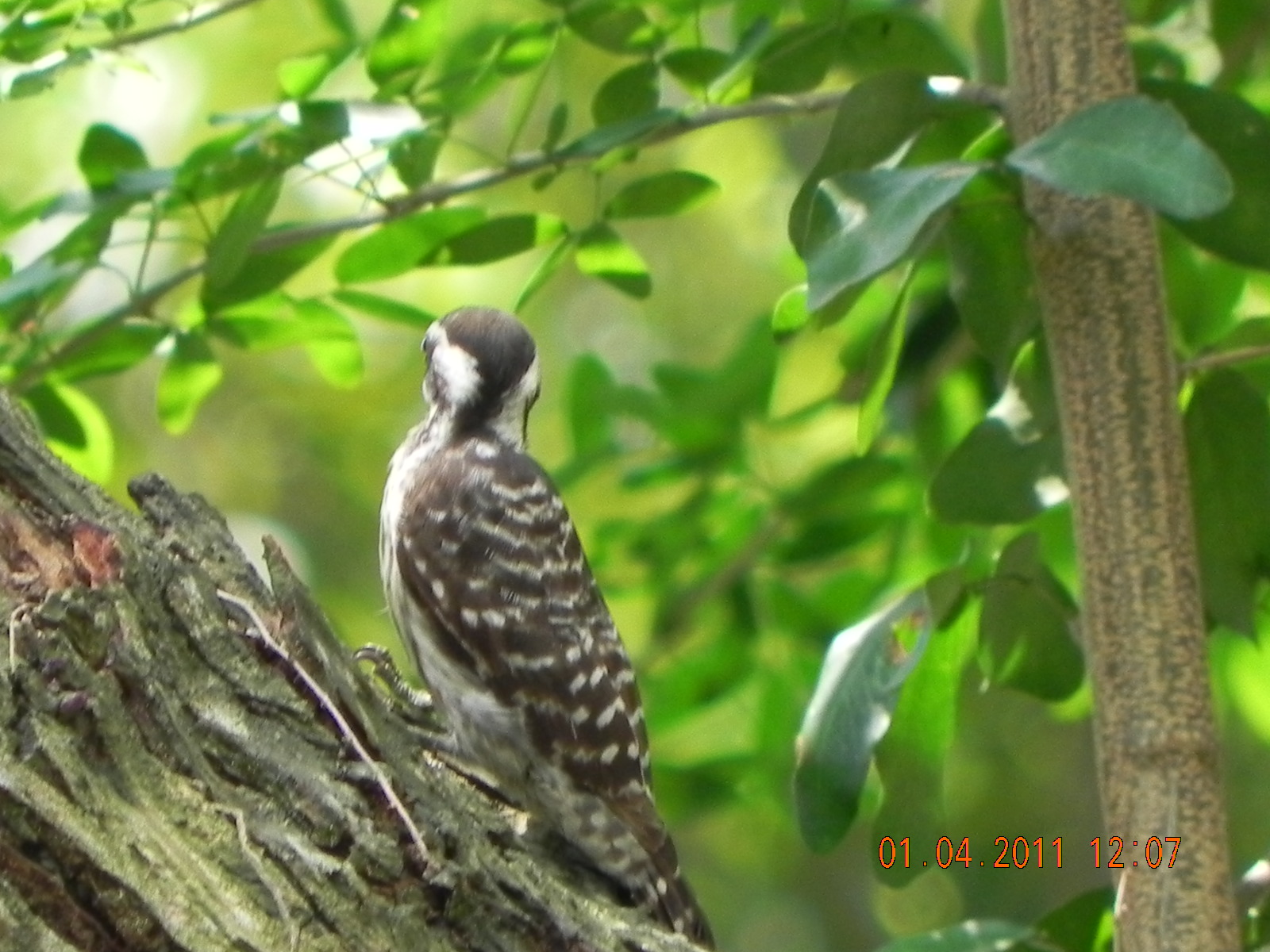
Directly above the shrubs was an interesting spider. Frankly, I know nuts about their identity but this one spun a web with a huge white cross on its web which left me wondering why it did that? On the way out, I happened to see a Sunda Pygmy Woodpecker, which I posted before, on the trunk of a huge Pithecellobium dulce (common name: Madras Thorn Tree; Family: Fabaceae / Leguminosae). How cute! In fact, I was told that this is a common bird in our urban environment and can often be seen on trees in the carpark. However, I have never seen it before until these 2 posts. Unfortunately, I wasn't able to get a good photo of it.


13 April 2011

PEST AND DISEASE

These photos were taken on 30th and 31st March at HortPark's Native Garden.

1st photo: scales
2nd - 3rd & 5th photos: mealy bugs
4th photo: sooty mould

Simply put, the pests are all sucking insects and they are the primary infestation. They would suck the plant sap or juice and secrete some 'honeydew' like substance that would attract ants. Hence, they have this mutual beneficial relationship and the ants are usually sucking pests farmers.

Associated with the primary pests is usually the secondary infestation of fungal disease, like sooty mould. So in order to get rid of the sooty mould, one needs to remove the causal agent or the source of the problem. Otherwise, the effort would likely be futile.

Some links on the pests and the natural enemy of sucking pests, the ladybird, are shown below: