Showing posts with label pond. Show all posts

02 January 2016

TREE DUCKS

I love taking photos of these subjects, which are frequently found visiting the kidney pond.


24 February 2014

BIOSWALE AND POND

I have not explored this part of the garden and was pleasantly surprised to find a beautiful pool of water complete with a bioswale. Just staring at this pond made me felt cool and peaceful. 

08 February 2014

REFLECTION

If not for the silhouette of the Supertrees in the photo, who would have suspected this is a photo taken beside one of the ponds at Gardens by the Bay.

The silhouette, form and shape of the trees, leaves and branching pattern etc transform this into a spot for tranquility. It is easy to find solace in this quiet area for meditation or simply reflection. 

21 December 2012

LESSER TREE DUCK

These photos were not taken by me but these ducks have been spotted in this new pond on quite a number of occasions already. Hopefully, in time to come, there would be an entire population of resident ducks here.

19 March 2012

YISHUN POND

Today's weather - sunny
This is a new structure that was built beside the Yishun Pond. Unfortunately, I didn't have the time to check it out but I must say it is an interesting lookout point.

07 April 2011

TOA PAYOH TOWN PARK - PART 2

After the pergola, I approached this rustic part of the park. You see, when we were redeveloping the park, there was a part of the park that was occupied by a temporary bus interchange before it was moved to its present permanent location across the road and there was this other part that was nostalgic to most residents who lived in this area.

The decision then was to redevelop this latter part with a more modern look to it and retain the rustic feel of the former. This is the former part that leads to a chinese-design bridge over a pond. The old and bent Callistemon viminalis trees were kept because of the beauty they give to the pond with their arching branches. The reflection of the landscape in the pond was just splendid and the small islands of plants in the pond add a different dimension to it. The landscape architect was brilliant and suggested the use of Phoenix palms in the water as a trial and they are still there in the pond today.

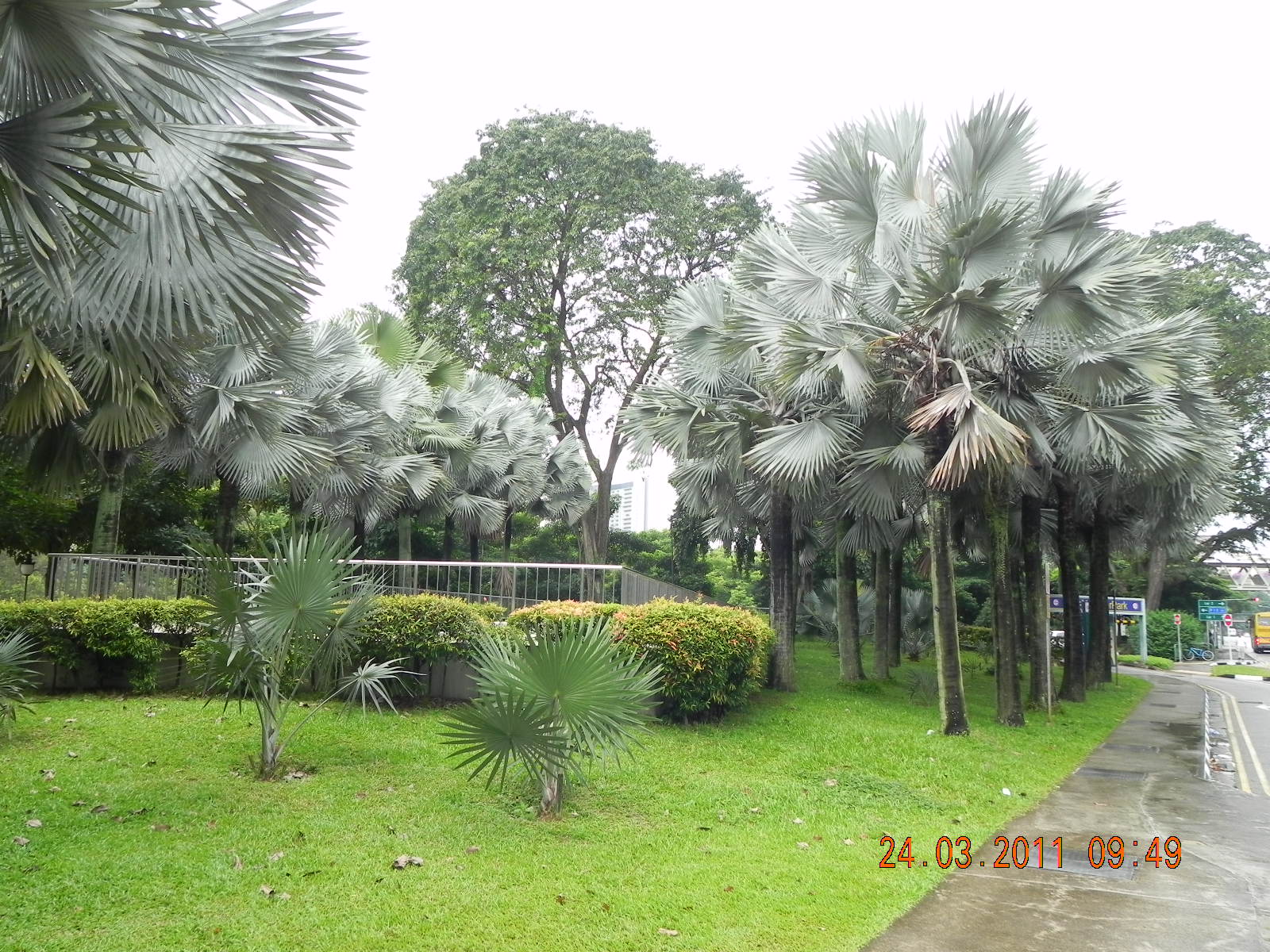
Amongst the marginal aquatic plants was a Waterhen that moved quietly through the thick growth. Part of the old concrete footpath along the pond edge was laid with wooden blocks salvaged from an Australian railway, at least that was what I was told. Then I was back on the red-bricked pathway that led me out of the park where I was greeted by the majestic rows of silver Bismarckia nobilis that is so iconic of this location.


03 March 2011

TAMPINES ECO-GREEN PART 1

It was damned hot when I went down to the new nature park that is undergoing development. It is a nature park because much of the natural parts of the park is conserved as it is.

The only portion that is being developed is the main entrance area with a shelter and landscaped beds, and the main circulation path that is turfed with Zoysia matrella. There are 3 zones within this large park and they are the open wasteland, the freshwater pond and the secondary forest trail.

Bioswales are being constructed to drain the surface runoff into small ponds and streams etc and there are some interesting plants that I have not seen elsewhere. Bird hides were also made from natural branches weaved together to form a natural screen.

Oh, it was so hot that some photos were overposed to the light and appeared washed out and I almost fainted from the heat and become a dried corpse. When I was home, I realized my arms had 2 distinctive colour tones of dark and light.

A link on the bioswale is shown below.

28 October 2010

KHOO TECK PUAT HOSPITAL - POND

Once again, I had to break up the postings on KTPH. In this post, I am trying to show some of the plants that were planted in the pond; plants that were seemingly non-aquatic plants.

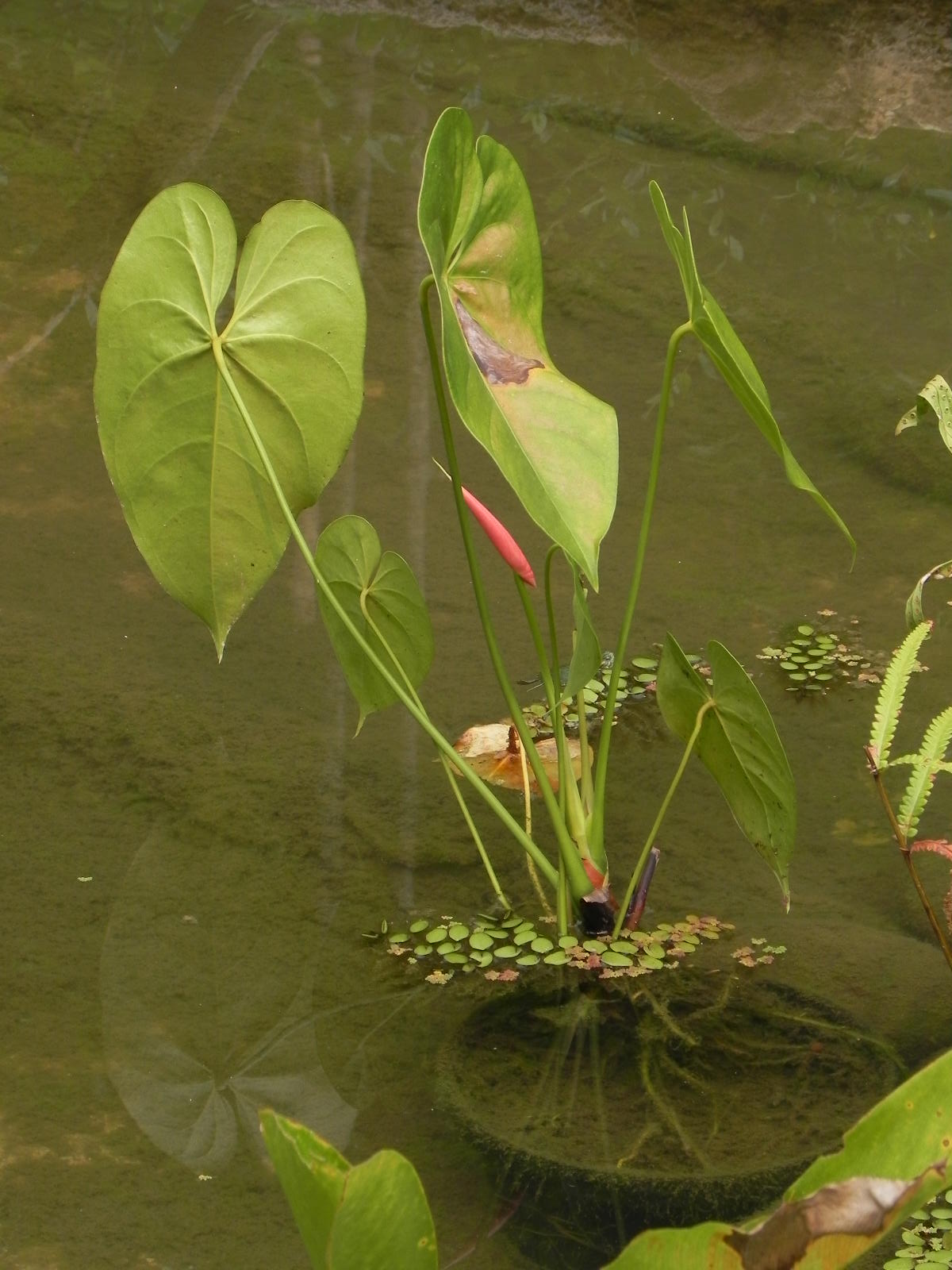
The 2nd photo shows the Musa ornata (common name: Bronze Banana) in a black polybag soaking in the water at the edge. The 3rd shows the Musa sumatrana (common name: Blood Banana) and the 4th and 5th show the Anthurium andraeanum (common name: Flamingo Lily). Then there was also the Algaonema nitidum.

The 6th photo is on the Curcuma or Canna (I think) and the 7th a palm. The 8th and 9th photos are the Costus and Heliconia. The common thing here is they were all displaying pale green leaves, which is a symptom of nutrient deficiency, likely brought about by its growth in hydroculture. This is something to consider when growing plants in water where one cannot afford to fertilize the water heavily, especially when there is aquatic fauna.

Yes, there is no mistake here. Even such non-aquatic plants can be acclimatised to be grown in hydroculture.